
Best Baby Formulas for US Families (2026 Buying Guide)
Last updated 2026-04-25 · facts verified · María López Botín · not a doctor, contains a paid link to Organic's Best Shop
There is no single "best baby formula." There are best fits, the formula whose composition, certification, regulatory pathway, and price match what your family is optimizing on. This master guide ranks 12 Stage 1 formulas across the use cases that drive most US- family decisions in 2026, sorted not as a quality ranking but as best for X picks. Read the entry whose title matches your priority.
A note on the words, because they cause real confusion: "formula milk", "infant formula" and "baby formula" all mean the same product. "Formula milk" is the standard term in the UK and Ireland and is common among families here who grew up with it; "infant formula" is the term FDA 21 CFR 107 and EU Regulation 2016/127 both use. Nothing on a tin changes with the phrasing. Where this guide says infant formula, read formula milk if that is your word for it.
The top three (Kendamil Organic, HiPP Dutch, Bobbie Original) cover the largest share of US-family demand because they each occupy a distinct use-case combination at the cleanest available baseline within their tier. The remaining nine address specific structural preferences, whole-milk-fat without organic, Demeter biodynamic, goat-milk with HMO, USDA Organic budget, palm-and-soy avoidance, and so on.
Twelve picks, chosen by use case rather than an absolute best. Kendamil Organic leads for whole-milk fat with organic and HMO at US retail; HiPP Dutch for the deepest EU organic bioactive stack; Bobbie for the cleanest USDA Organic; Holle Cow for the strictest organic tier; Earth's Best and Aptamil UK on price; Kabrita and Kendamil Goat for goat.
How to use this guide
The decision frame for US-family Stage 1 formula has six primary axes; rank them in your priority order and pick accordingly:
-
Fat-blend quality. Whole-milk-fat preservation (Kendamil family, ByHeart) > sn-2 palmitate (Kabrita) > standard RSPO palm plus supplementary oils (HiPP, Holle, Lebenswert) > all-seed-oil palm-free (Bobbie, Loulouka, Aptamil UK). See the palm oil explainer for the corrected current-literature framing.
-
Organic certification tier. Demeter biodynamic (Holle) > EU Organic plus UK Soil Association (Kendamil Organic) > EU Organic baseline (HiPP, Loulouka, Lebenswert, Jovie) > USDA Organic (Bobbie, Earth's Best, Similac Organic) > none. See organic certifications compared.
-
Bioactive depth. Maximum stack (Enfamil Enspire with MFGM + lactoferrin + 2'-FL HMO) > probiotic + bioactive folate (HiPP Dutch Combiotik) > 2'-FL HMO + MFGM (Kendamil Organic, ByHeart) > 2'-FL HMO + GOS (Similac Pro-Advance, Kabrita) > GOS+FOS prebiotic (Kendamil Classic, Aptamil UK) > minimalist (Holle, Lebenswert, Loulouka).
-
Regulatory pathway. FDA pre-market notification (Bobbie, Kendamil Classic, Kendamil Organic, Earth's Best, Similac, Enfamil)
FDA enforcement discretion at US retail (Kabrita, Kendamil Goat) FDA enforcement discretion via personal import (HiPP, Holle, Aptamil UK, Loulouka, Lebenswert, Jovie). All three pathways are legitimate; supply-and-cost implications differ.
-
Protein species. Cow-milk (mainstream choice) vs goat-milk (cow-milk-discomfort experimentation, not hypoallergenic) vs hypoallergenic (extensively hydrolyzed or amino-acid for diagnosed CMPA, separate category).
-
Cost and supply. From ~$1.29/oz (Earth's Best Dairy WIC- eligible) to ~$2.94/oz (Bobbie Original) at standard retail. WIC eligibility, FSA/HSA coverage, and EU-import logistics are practical considerations beyond per-ounce price.
The ranking
1. Best overall: Kendamil Organic Stage 1
Kendamil Organic is the master pick because it combines five things no other Stage 1 formula combines at FDA-registered US retail: (a) EU Organic plus UK Soil Association Organic certifications, (b) whole-cow-milk-fat preservation (natural sn-2 palmitate + native MFGM + breast-milk-similar fatty-acid profile), (c) 2'-FL HMO plus GOS prebiotic, (d) no added palm and no soy, (e) FDA-registered for US retail at Target, Amazon, us.kendamil.com without import logistics. ~$1.95/oz.
For most families weighting closest-to-breast-milk fat profile plus organic certification plus bioactive depth, Kendamil Organic is the unambiguous default. Premium reflects the unique combination, not category-leader markup. See best whole-milk-fat formulas for the fat-blend deep dive.
2. Best EU Organic Combiotik: HiPP Dutch Stage 1
HiPP Dutch Stage 1 is the EU Organic flagship for families weighting bioactive depth specifically. The Combiotik formulation combines GOS prebiotic with Limosilactobacillus fermentum hereditum live probiotic, the only major EU-imported Stage 1 cow-milk formula delivering a documented live probiotic strain. Plus Metafolin (L-methylfolate calcium, the bioactive form of folate that bypasses the MTHFR enzymatic conversion step). Plus EU Organic certification. ~$1.77/oz delivered via Organic's Best Shop.
For families with documented MTHFR concerns or strong probiotic- strain inclusion preference, HiPP Dutch is the differentiator pick that Kendamil Organic doesn't address. The trade-off: contains RSPO palm (Kendamil Organic doesn't) and EU-import logistics (5-10 day shipping vs Kendamil's next-day FDA-registered retail).
3. Best USDA Organic at US retail: Bobbie Original
Bobbie Original is the independent USDA Organic challenger brand. USDA Organic plus Non-GMO Project plus Clean Label Project Purity Award (third-party testing for 400+ environmental contaminants beyond USDA Organic baseline). Excludes palm in any form, excludes soy. Lactose-only carbohydrate. FDA-registered, no recall history. ~$2.94/oz at Target, Amazon, Whole Foods.
For families weighting US-domestic manufacturing plus the cleanest USDA Organic ingredient list plus clean recall history, Bobbie is the principal answer. The fat-blend trade-off vs whole-milk-fat: Bobbie uses coconut + sunflower + rapeseed only (palm-free + soy-free) which is palmitic-acid-poor relative to whole-milk-fat or RSPO-palm formulas, a meaningful structural consideration per current literature, but families committed to USDA Organic + palm-avoidance plus US-domestic plus clean recall history have Bobbie as the definitive answer.
4. Best non-organic whole-milk-fat: Kendamil Classic Stage 1
Kendamil Classic carries Kendamil's signature whole-milk-fat preservation philosophy at lower price than the Organic line. UK Red Tractor and Vegetarian Society marks (no organic certification). Whole-cow-milk fat preserves native MFGM and natural sn-2 palmitate. GOS+FOS 9:1 prebiotic. No added palm, no soy. FDA-registered for US retail. ~$1.30/oz at Target, Amazon, us.kendamil.com.
For families weighting whole-milk-fat MFGM contribution at lower price than the Organic upgrade, Kendamil Classic is the in-family option. Many families start with Kendamil Classic and pivot to Kendamil Organic if the ~$0.30/oz upgrade for EU Organic + 2'-FL HMO addition is acceptable.
5. Best Demeter biodynamic: Holle Cow Stage 1
Holle Cow Stage 1 carries Demeter biodynamic plus EU Organic, the strictest organic certification globally. Demeter requires whole-farm biodynamic conversion (not parcel-by-parcel), stricter dairy animal welfare, and biodynamic-method use in soil management. Composition philosophy is intentionally minimalist (no GOS, no HMO, no probiotic). RSPO palm in fat blend, no soy. Lactose-only. ~$1.95/oz delivered.
For families weighting strictest-possible organic certification plus minimalist ingredient list, Holle Cow is the European Stage 1 reference. The Demeter overlay matters for families weighting agricultural and animal-welfare standards beyond baseline organic.
6. Best US-domestic deepest bioactives: ByHeart Whole Nutrition
ByHeart Whole Nutrition is US-domestic, FDA-registered, with whole- cow-milk-fat preserving native MFGM, plus 2'-FL HMO plus lactoferrin plus GOS, the deepest bioactive stack in any whole-milk-fat US Stage 1 formula. No added palm, no soy. Non-organic. ~$2.59/oz at US retail.
Caveat: ByHeart had a 2025 botulism recall. The recall was addressed but families considering ByHeart should verify current production-batch status before purchase. Bobbie's clean recall history is the principal trade-off relative to ByHeart's bioactive depth advantage.
7. Best goat-milk with HMO: Kabrita Stage 1
Kabrita Stage 1 is the only goat-milk Stage 1 with 2'-FL HMO at US-accessible distribution. Dutch non-organic, sn-2 palmitate (structured palm with palmitic acid in breast-milk-equivalent position) plus rapeseed and sunflower, no soy. GOS plus 2'-FL HMO. 60:40 whey:casein matching breast-milk reference ratio. ~$2.71/oz at Target, Amazon, Kabrita US direct under FDA enforcement discretion.
For families weighting HMO bioactive plus goat-milk protein, Kabrita is the unique answer. The sn-2 palmitate structured-palm form addresses the calcium-soap concern of standard palm without using whole-milk-fat preservation.
8. Best whole-goat-milk-fat: Kendamil Goat Stage 1
Kendamil Goat Stage 1 is the only whole-goat-milk-fat option at US retail. UK non-organic. Whole goat milk preserves native goat-milk MFGM. No GOS, no HMO, minimalist composition. No added palm, no soy. Algal-oil DHA. ~$2.41/oz at us.kendamil.com, select Whole Foods, Amazon.
For families weighting whole-milk-fat MFGM contribution in goat-milk format plus US-retail availability, Kendamil Goat is the unique option.
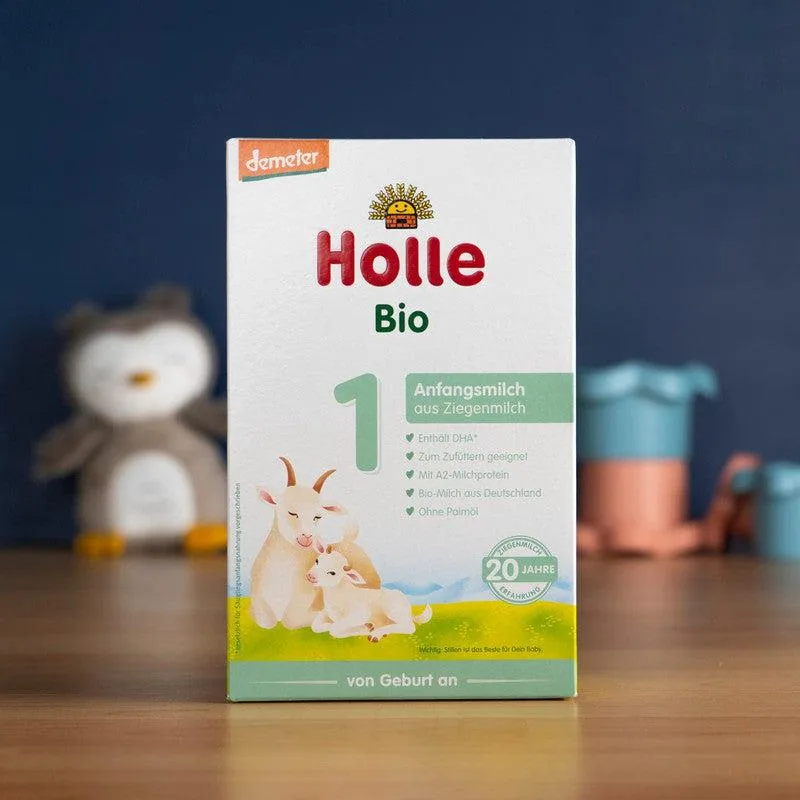
9. Best Demeter biodynamic goat-milk: Holle Goat Stage 1
Holle Goat Stage 1 is Demeter biodynamic plus EU Organic goat-milk. Minimalist composition (no GOS, no HMO). No added palm in any form, no soy, distinguishing from Holle Cow which contains RSPO palm. Fish-oil DHA. ~$2.41/oz delivered, 400 g tin.
For families weighting strictest organic plus goat-milk plus no-added-palm fat blend, Holle Goat is the unique combination globally.
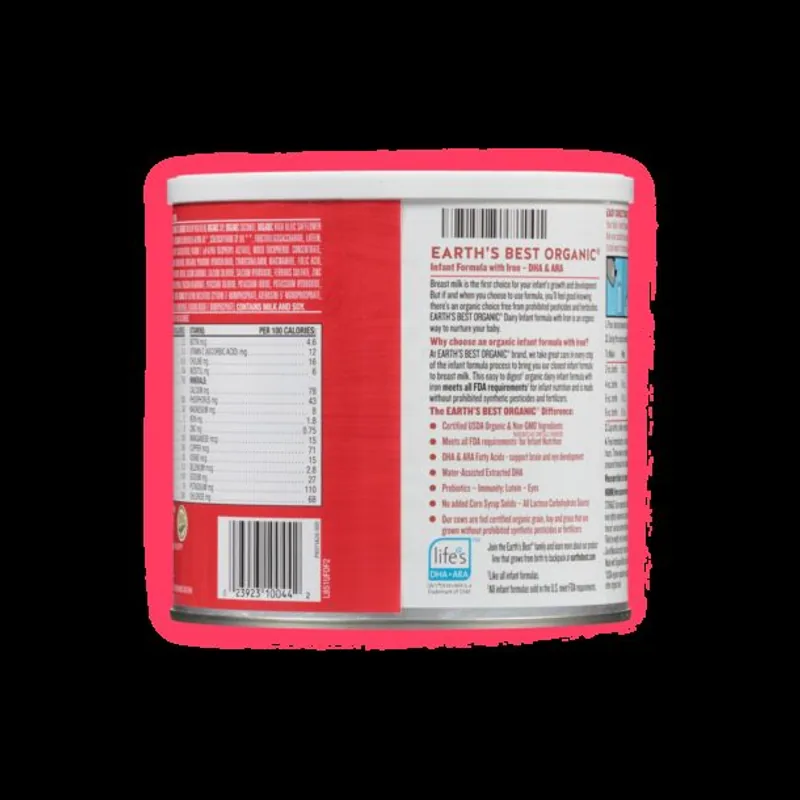
10. Best USDA Organic budget: Earth's Best Dairy
Earth's Best Dairy is the USDA Organic budget option, distributed broadly through US retail (Target, Walmart, Whole Foods, Amazon, grocery chains) and WIC-eligible in many states. FOS prebiotic addition. Palm and soy in fat blend. Lactose-primary. ~$1.29/oz at standard retail, $0 in WIC contract states.
For families weighting USDA Organic at the cheapest price plus broad US retail availability plus WIC eligibility, Earth's Best is the default answer. The fat-blend trade-off (palm and soy presence) is the principal consideration; for palm-and-soy-free USDA Organic at US retail, Bobbie is the alternative at higher price.
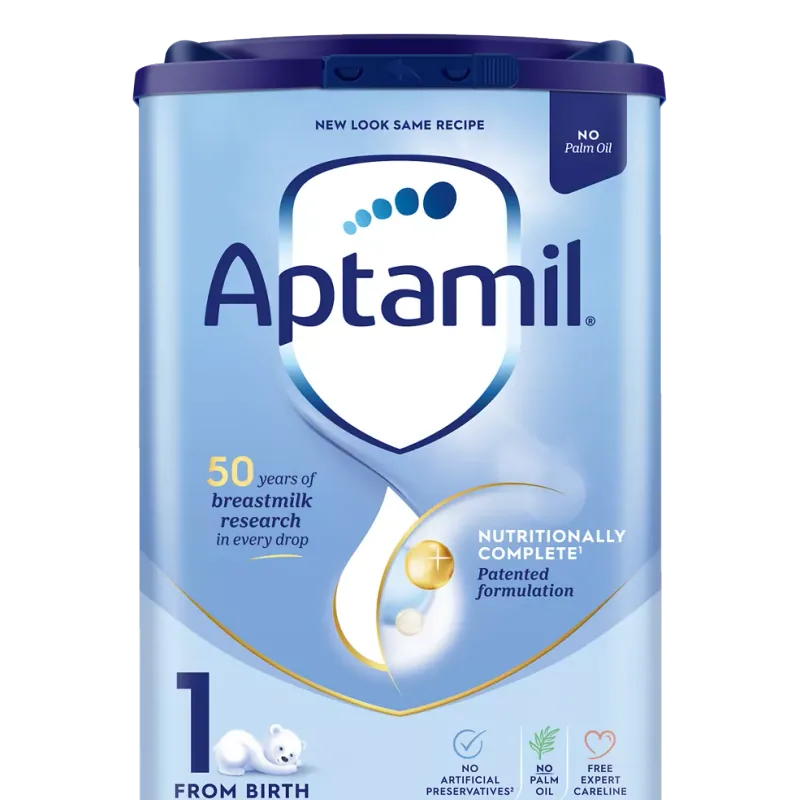
11. Best budget EU import: Aptamil UK Stage 1
Aptamil UK Stage 1 is the cheapest EU-import Stage 1 cow-milk formula at ~$1.42/oz delivered. Non-organic Danone Aptamil. Palm-free fat blend (UK variant specifically; Aptamil German variants contain palm). Soy is present in the fat blend. GOS+FOS 9:1 prebiotic plus 29% fermented dairy (Pronutra heritage).
For families avoiding palm and accepting soy plus non-organic at the cheapest EU-import price, Aptamil UK is the price floor.
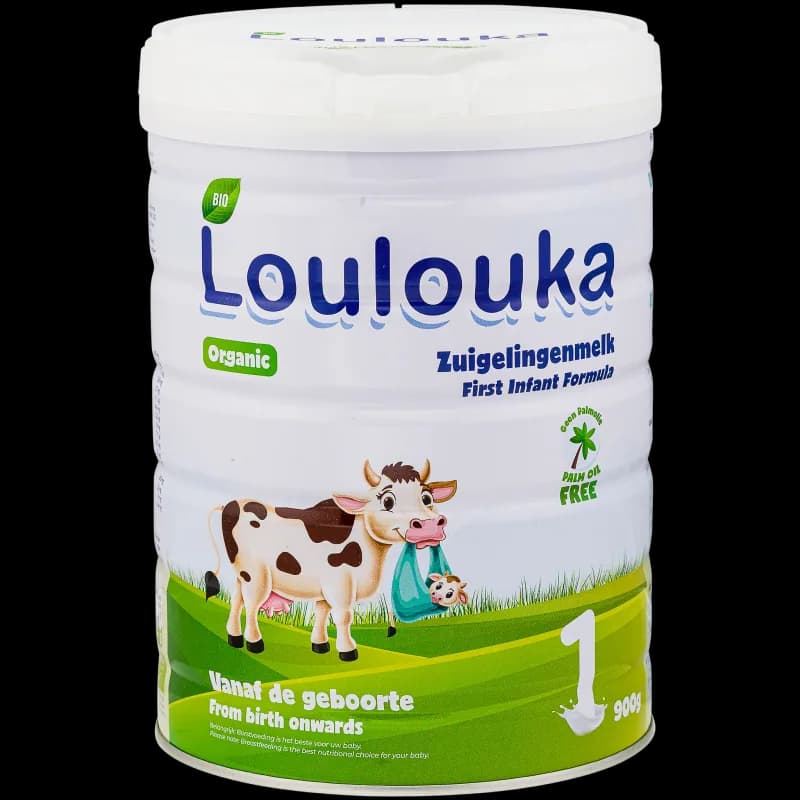
12. Best palm-free + soy-free EU Organic: Loulouka Stage 1
Loulouka is one of the few EU Organic Stage 1 formulas that excludes both palm and soy. Swiss EU Organic plus Swiss Bio. Coconut, sunflower, and rapeseed only. Lactose-only plus GOS prebiotic. ~$1.45/oz delivered.
For families wanting EU Organic plus palm-and-soy avoidance at the cheapest EU-organic price (lower than Bobbie's USDA Organic equivalent on this dimension), Loulouka is the principal choice. Caveat: smaller production capacity, supply can run thin during demand spikes.
What's NOT in the top 12
- Similac Pro-Advance, Similac 360 Total Care, Similac Organic, US mainstream Abbott formulas. Quality is fine; on a like-for-like composition comparison, the picks above clear most axes more cleanly. WIC eligibility makes Similac the practical default in many states; for families on WIC where Similac is contracted, that cost-driven choice is fully defensible. See Bobbie Original vs Similac Organic for the head-to-head.
- Enfamil NeuroPro, Enfamil Enspire, Enfamil Simply Organic, US mainstream Reckitt formulas. Enspire has the deepest US bioactive stack (MFGM + lactoferrin + 2'-FL HMO) but contains palm and soy; for families weighting maximum bioactive at US retail, Enspire is a defensible specialty pick. NeuroPro and Simply Organic are category-leader options without unique structural advantages over the 12 ranked above.
- Happy Baby Organic Infant, USDA Organic with maltodextrin and glucose-syrup-solids before whey on the ingredient list. The carbohydrate composition is structurally distinct from the lactose- primary picks above. See Happy Baby Organic Infant vs HiPP Dutch Stage 1 for the carbohydrate analysis.
- Lebenswert, Jovie Goat, both legitimate EU-Organic picks covered in their dedicated buying guides. Lebenswert is Bioland- certified Holle-manufactured budget. Jovie is EU Organic Dutch goat-milk with GOS. Excluded from top 12 for redundancy (Holle Cow covers Demeter cow, Holle Goat covers Demeter goat, Loulouka covers cleanest EU-organic fat blend).
For specialty conditions, see:
- Diagnosed CMPA (cow milk protein allergy): see hypoallergenic formula explained. None of the 12 ranked above are appropriate. Look at extensively hydrolyzed (Nutramigen, Similac Alimentum, Gerber Extensive HA, HiPP HA) or amino-acid (Neocate, EleCare, Puramino) formulas.
- Reflux: Enfamil AR (rice-thickened) is the principal US option. Holle PRE / Stage 1 is sometimes used for mild reflux without specific reflux-formulation. Consult pediatrician.
- Constipation history: whole-milk-fat formulas (Kendamil family, ByHeart) or sn-2 palmitate (Kabrita) often improve stool consistency vs standard-palm formulas. Avoid all-seed-oil palm-free formulas if constipation persists despite hydration optimization.
- Premature infants: specialty premature-infant formulas (Similac NeoSure, Enfamil EnfaCare). Not addressed in this guide.
Comparison summary
| Pick | Origin | Protein | Organic | Fat blend | Bioactive | Price/oz |
|---|---|---|---|---|---|---|
| Kendamil Organic | UK | Whole cow | EU + UK Soil | Whole-milk-fat + MFGM, no palm/soy | GOS + 2'-FL HMO | ~$1.95 |
| HiPP Dutch | NL | Skim cow | EU Organic | RSPO palm, no soy | GOS + L. fermentum + Metafolin | ~$1.77 |
| Bobbie Original | US | Skim cow | USDA Organic + Clean Label | Coconut + sunflower + rapeseed (no palm/soy) | None | ~$2.94 |
| Kendamil Classic | UK | Whole cow | none | Whole-milk-fat + MFGM, no palm/soy | GOS+FOS 9:1 | ~$1.30 |
| Holle Cow | DE | Skim cow | Demeter + EU | RSPO palm, no soy | None | ~$1.95 |
| ByHeart | US | Whole cow | none | Whole-milk-fat + MFGM, no palm/soy | 2'-FL HMO + lactoferrin + GOS | ~$2.59 |
| Kabrita | NL | Whole goat | none | sn-2 palmitate, no soy | GOS + 2'-FL HMO | ~$2.71 |
| Kendamil Goat | UK | Whole goat | none | Whole-goat-milk-fat + MFGM, no palm/soy | None | ~$2.41 |
| Holle Goat | DE | Whole goat | Demeter + EU | No palm, no soy | None | ~$2.41 |
| Earth's Best Dairy | US | Skim cow | USDA Organic | Palm + soy + coconut + safflower | FOS | ~$1.29 |
| Aptamil UK | UK | Skim cow | none | Palm-free + soy + rapeseed/sunflower | GOS+FOS + 29% fermented | ~$1.42 |
| Loulouka | CH | Skim cow | EU + Swiss Bio | Coconut + sunflower + rapeseed (no palm/soy) | GOS | ~$1.45 |
Frequently asked questions
What is the best baby formula in 2026?
What formulas should you stay away from?
What is the number one recommended baby formula?
What is the healthiest baby formula?
What is the safest baby formula?
What formula do most pediatricians recommend?
What formula is closest to breast milk?
Is European or US formula better?
Is whole-milk fat better than palm oil + seed oils?
What is the cheapest baby formula?
Which formula is closest to breast milk?
Are organic formulas safer than non-organic?
Should I avoid formulas with palm oil?
Can I switch between formulas in this ranking?
Related reading
-
Kendamil Classic Stage 1 vs Enfamil NeuroPro - whole milk fat against added MFGM
-
Enfamil Enspire vs Similac 360 Total Care, the two US premium flagships head to head
-
Best Baby Formulas Closest to Breast Milk (2026 Buying Guide)
-
Best Non-GMO Baby Formulas for US Families (2026 Buying Guide)
-
Infant Formula Labeling Rules, What FDA and EU Mandate on the Tin
-
Monthly Cost of Formula Feeding, A Realistic Budget Breakdown
-
Decoding Infant Formula Marketing Claims, What 'Premium', 'Advanced', and 'Natural' Actually Mean
-
Formula Water Temperature, The Science Behind 70°C and Cronobacter Protection
Primary sources
- FDA 21 CFR Part 107: US infant formula regulation. ecfr.gov
- EU Regulation 2016/127 on infant formula composition. eur-lex.europa.eu
- USDA National Organic Program. ams.usda.gov
- FDA enforcement discretion: Personally-imported infant formula framework. fda.gov
This site provides research and comparisons, not medical advice. Consult your pediatrician before changing your baby's formula.
The ranked picks
Typical US retail price, normalised to USD per ounce of powder. Imported European formulas carry shipping and importer margin; US retail brands are typically cheapest per ounce. Subscribe-and-save and private-label pricing can shift the ranking.
Data table
| Formula | Price per ounce |
|---|---|
| Earth's Best Dairy | $1.29 |
| Kendamil Classic Stage 1 | $1.30 |
| Aptamil UK Stage 1 | $1.42 |
| Loulouka Stage 1 | $1.45 |
| HiPP Dutch Stage 1 | $1.77 |
| ByHeart Whole Nutrition | $1.88 |
| Kendamil Organic Stage 1 | $1.95 |
| Holle Cow Stage 1 | $1.95 |
| Kendamil Goat Stage 1 | $2.41 |
| Holle Goat Stage 1 | $2.41 |
| Kabrita Stage 1 | $2.71 |
| Bobbie Original | $2.94 |
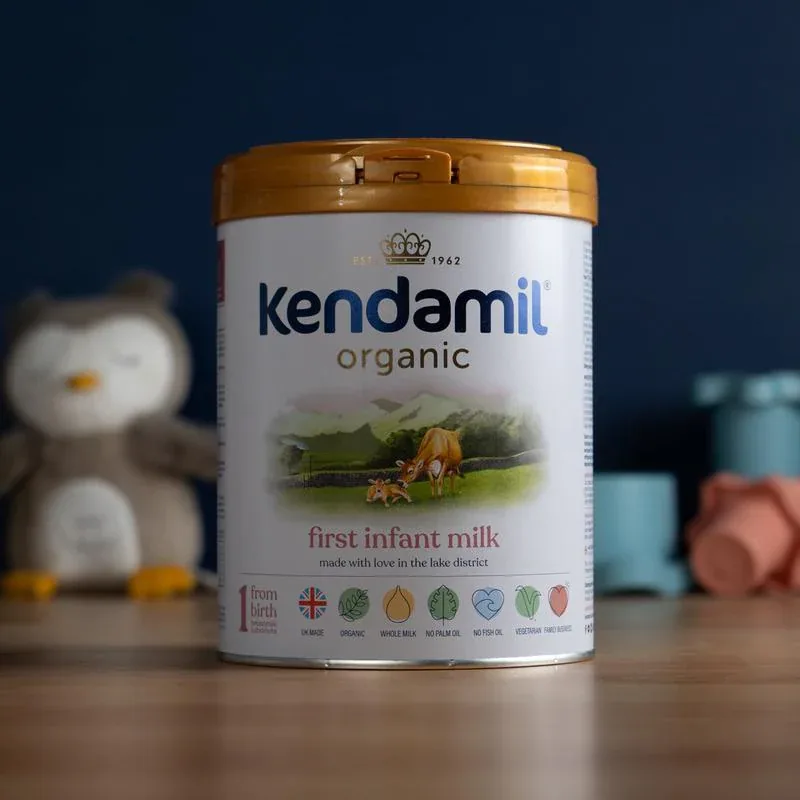
#1 · Best overall (closest to breast milk + organic + bioactive at US retail)
Kendamil Organic Stage 1
EU Organic and UK Soil Association Organic. Whole-cow-milk fat preserves natural sn-2 palmitate plus native MFGM. Adds 2'-FL HMO plus GOS prebiotic. No added palm, no soy. FDA-registered for US retail without import logistics. The unique combination of organic + whole-milk-fat MFGM + HMO at FDA-registered retail. ~$1.95/oz.
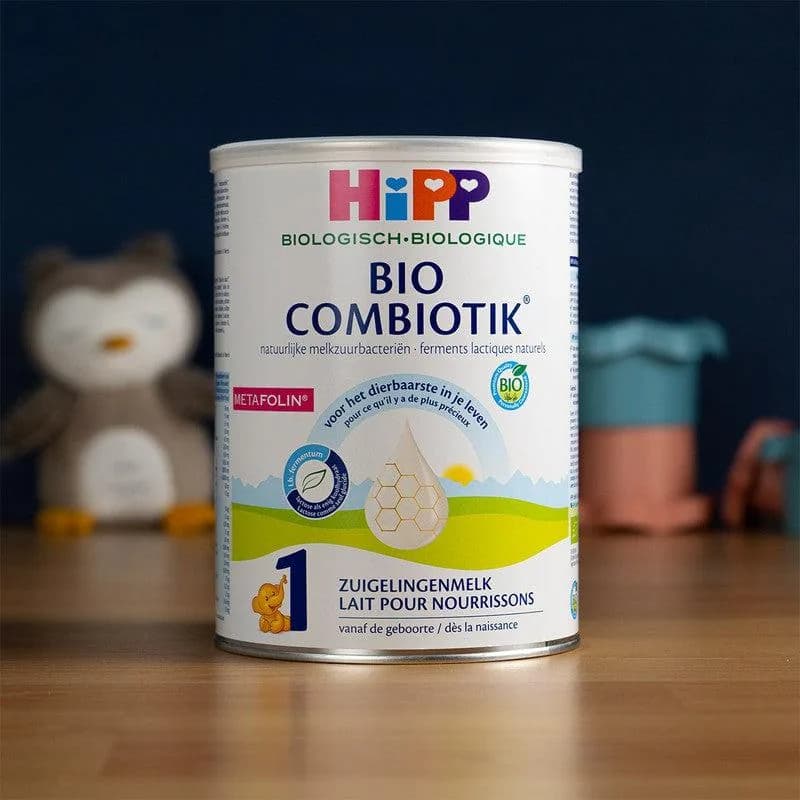
#2 · Best EU Organic with deepest bioactive stack (Combiotik)
HiPP Dutch Stage 1
EU Organic Dutch Combiotik flagship. Live Limosilactobacillus fermentum hereditum probiotic plus GOS prebiotic plus Metafolin bioactive folate, the deepest bioactive stack in EU Organic Stage 1 cow-milk format. Decade-plus US-import track record. ~$1.77/oz delivered via Organic's Best Shop.
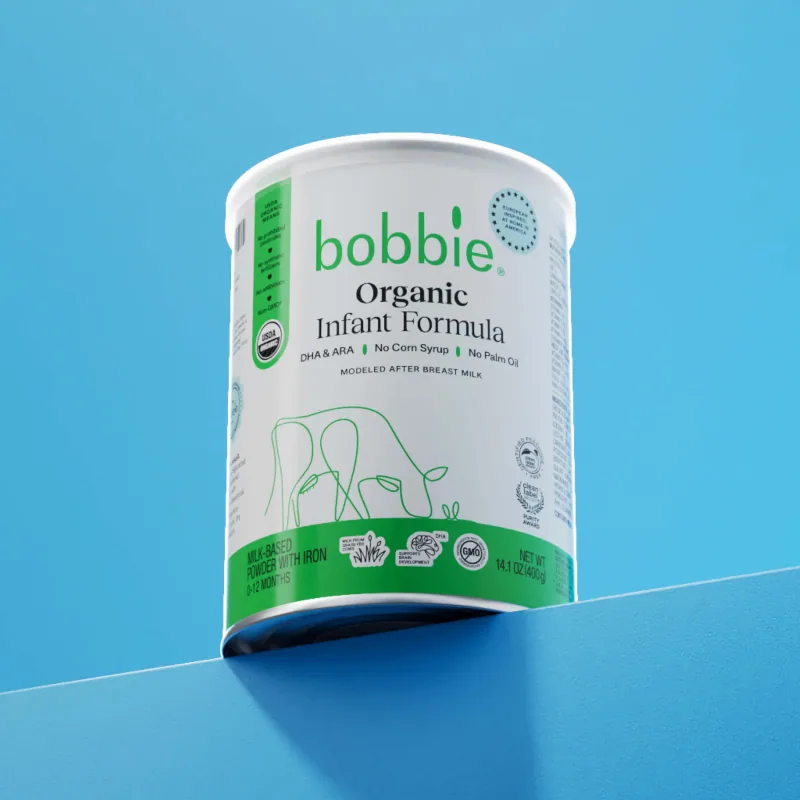
#3 · Best USDA Organic at FDA-registered US retail
Bobbie Original
Independent US-domestic challenger brand. USDA Organic plus Non-GMO Project plus Clean Label Project Purity Award. Excludes palm in any form, excludes soy. Lactose-only carbohydrate. FDA-registered, no recall history. The cleanest USDA Organic at next-day US retail. ~$2.94/oz.
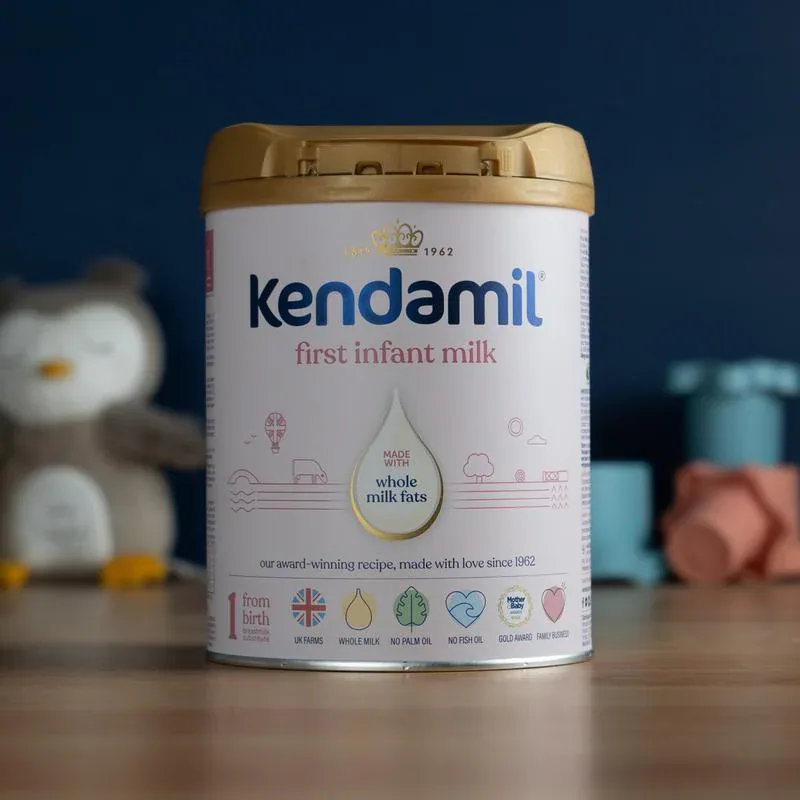
#4 · Best non-organic whole-cow-milk-fat at US retail
Kendamil Classic Stage 1
UK Red Tractor and Vegetarian Society marks (non-organic). Whole-cow-milk fat preserves native MFGM. GOS+FOS 9:1 prebiotic blend. No added palm, no soy. FDA-registered for US retail. The whole-milk-fat philosophy without organic certification at lower price. ~$1.30/oz.
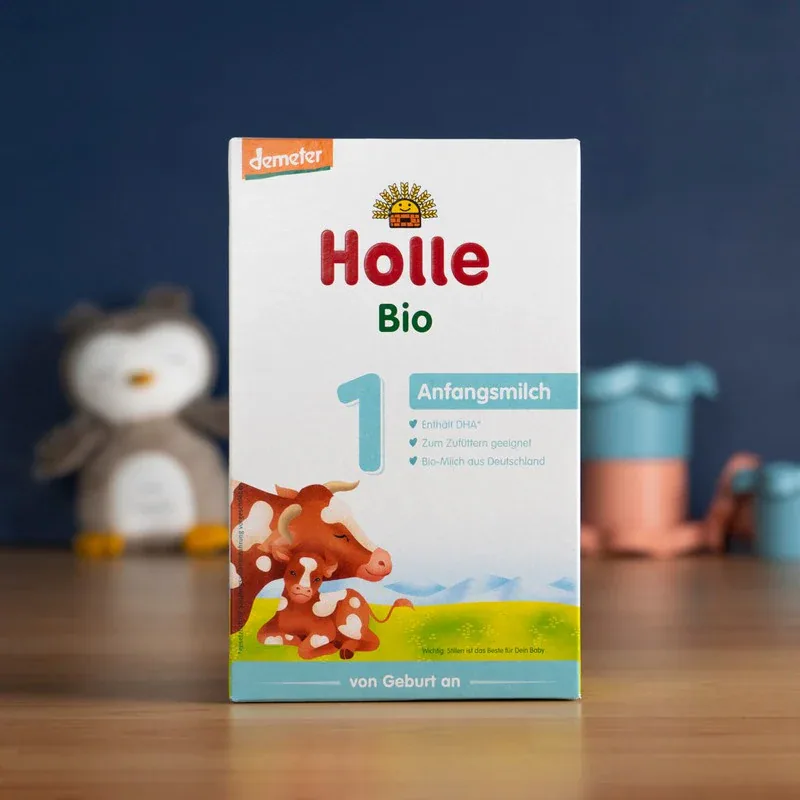
#5 · Best Demeter biodynamic (strictest organic globally)
Holle Cow Stage 1
Demeter biodynamic plus EU Organic, strictest organic certification globally. Whole-farm biodynamic conversion required, stricter animal welfare than EU Organic baseline. Minimalist composition (no GOS, no HMO, no probiotic). RSPO palm in fat blend, no soy. Lactose-only. ~$1.95/oz delivered.
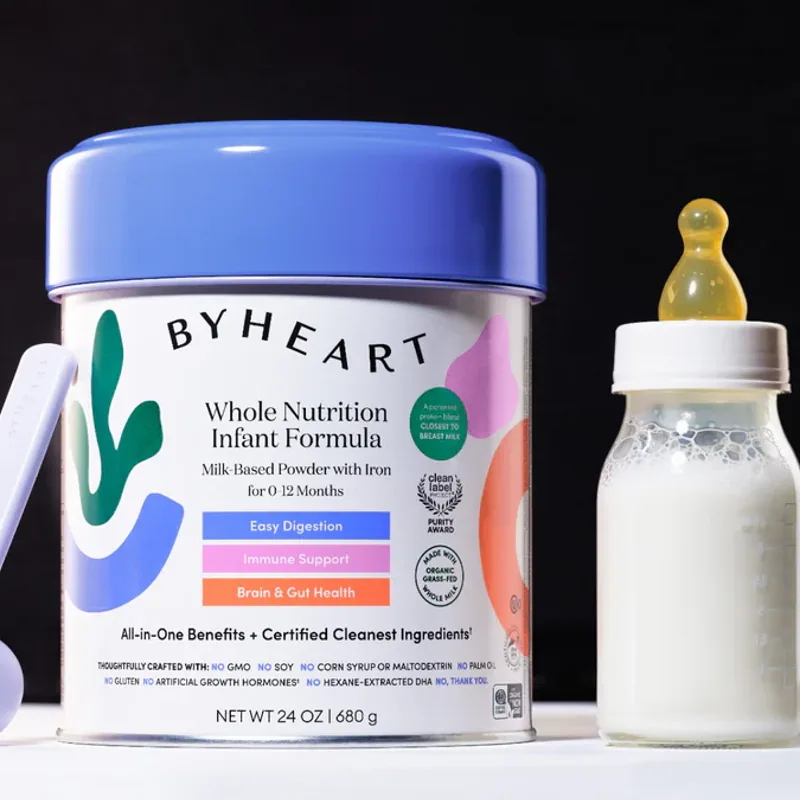
#6 · Best US-domestic with deepest bioactives (recall caveat)
ByHeart Whole Nutrition
US-domestic, FDA-registered. Whole-cow-milk fat preserves native MFGM. 2'-FL HMO plus lactoferrin plus GOS, deepest bioactive stack in any whole-milk-fat US Stage 1. No added palm, no soy. Caveat: 2025 botulism recall, verify current production-batch status before purchase. ~$2.59/oz.
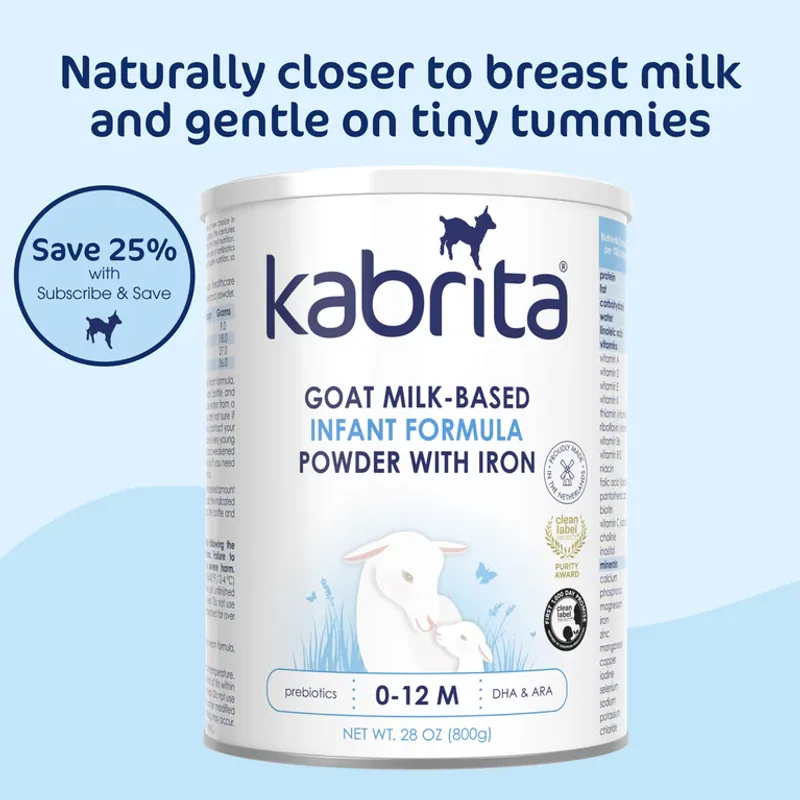
#7 · Best goat-milk with 2'-FL HMO at US retail
Kabrita Stage 1
Dutch non-organic goat-milk with sn-2 palmitate (structured palm) plus rapeseed and sunflower (no soy). GOS plus 2'-FL HMO. 60:40 whey:casein matching breast-milk reference. The only goat-milk Stage 1 with HMO at US-accessible distribution. FDA enforcement discretion at Target, Amazon. ~$2.71/oz.
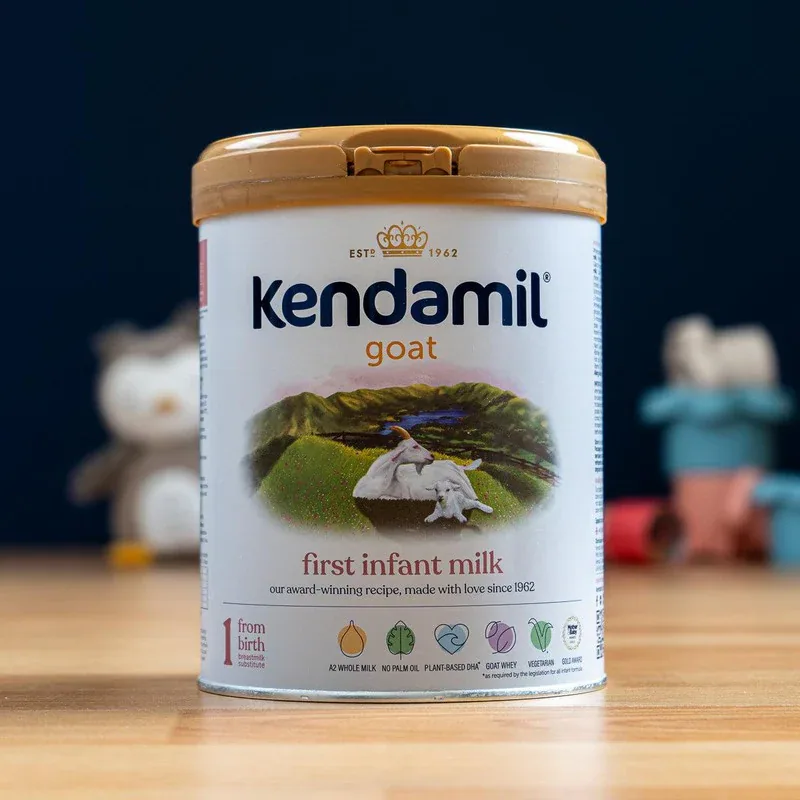
#8 · Best whole-goat-milk-fat at US retail
Kendamil Goat Stage 1
UK whole-goat-milk fat preserves native MFGM. The only whole-goat-milk-fat option at US retail. No GOS, no HMO, minimalist composition. No added palm, no soy. Algal-oil DHA. ~$2.41/oz at us.kendamil.com, select Whole Foods, Amazon.
#9 · Best Demeter biodynamic goat-milk
Holle Goat Stage 1
Demeter biodynamic plus EU Organic goat-milk. Minimalist composition (no GOS, no HMO). No added palm, no soy. The strictest-organic goat-milk Stage 1 globally. ~$2.41/oz delivered, 400 g tin.
#10 · Best USDA Organic budget option
Earth's Best Dairy
USDA Organic plus Non-GMO Project Verified. FDA-registered, broad US retail (Target, Walmart, Whole Foods, Amazon, grocery), WIC-eligible in many states. FOS prebiotic. Palm and soy in fat blend. Lactose-primary. The cheapest USDA Organic Stage 1 at ~$1.29/oz, $0 in WIC contract states.
#11 · Best budget EU import (cheapest non-organic European)
Aptamil UK Stage 1
Cheapest EU-import Stage 1 (~$1.42/oz delivered). Non-organic Danone Aptamil. Palm-free fat blend (UK variant specifically). GOS+FOS 9:1 prebiotic plus 29% fermented dairy (Pronutra heritage). Soy in fat blend. The price floor among EU imports.
#12 · Best palm-free + soy-free EU Organic at low price
Loulouka Stage 1Discontinued
Swiss EU Organic plus Swiss Bio. Excludes palm in any form, excludes soy. Coconut, sunflower, and rapeseed only. Lactose-only carbohydrate plus GOS prebiotic. The EU-organic answer for families avoiding both palm and soy. ~$1.45/oz delivered.