
Best Baby Formulas with Probiotics for US Families (2026)
Last updated 2026-04-25 · facts verified · María López Botín · not a doctor, contains a paid link to Organic's Best Shop
Probiotic-fortified infant formulas are a small but distinct category in the US-accessible market. Most Stage 1 formulas don't include live probiotic strains; the four ranked here are the principal options for families specifically wanting probiotic inclusion. The choice narrows by use case: standard cow-milk Stage 1 with probiotic, pHF formula with probiotic, or CMPA-indicated eHF with probiotic.
Four Stage 1 formulas carry a documented live probiotic strain for US families. HiPP Dutch has L. fermentum hereditum CECT5716 and HiPP German has B. lactis BB-12, both EU Organic. Gerber Good Start SoothePro puts B. lactis Bb-12 in a partially hydrolysed format at US retail. Nutramigen with LGG is the extensively hydrolysed route for diagnosed CMPA.
What "probiotic" means in infant formula
A probiotic in infant formula is a documented live bacterial strain included in the powder at viable concentrations. The strains used in Stage 1 formulas globally are limited:
- Limosilactobacillus fermentum hereditum CECT5716 (Lactobacillus family), used in HiPP Dutch Combiotik. Originally isolated from human breast milk. Clinical evidence for term-infant gut microbiome modulation and respiratory infection reduction.
- Bifidobacterium lactis BB-12 (Bifidobacterium family), used in HiPP German and Gerber Good Start SoothePro. Extensively clinically documented in both adult and infant uses for gut microbiome support and immune-system effects.
- Lactobacillus rhamnosus GG (LGG), used in Nutramigen with LGG for CMPA management. Clinically documented for diarrhea reduction and CMPA outcome support.
These three strains are the principal probiotics in US-accessible Stage 1 formulas. Other probiotic strains exist in adult and dietary- supplement contexts but are not typically incorporated into infant formula products.
EU Regulation 2016/127 permits probiotic addition to infant formulas with safety documentation; FDA 21 CFR Part 107 similarly permits live probiotic strains. The clinical evidence for infant-formula probiotics is documented but not unanimous, systematic reviews support specific outcome benefits for specific strain inclusions rather than generic "probiotic = better."
The ranking
1. Best EU Organic with L. fermentum probiotic: HiPP Dutch Stage 1
HiPP Dutch Stage 1 is the EU Organic flagship for probiotic-fortified Stage 1 cow-milk. The Combiotik formulation combines live Limosilactobacillus fermentum hereditum CECT5716 with GOS prebiotic and Metafolin bioactive folate, the deepest bioactive stack in EU-imported cow-milk Stage 1. ~$1.77/oz delivered.
The L. fermentum strain is rarer in commercial use than B. lactis BB-12; HiPP's Dutch line is the principal source for families specifically wanting this strain. The original-from-breast-milk isolation history is part of HiPP's positioning. See HiPP Dutch vs HiPP German Stage 1 for the Combiotik strain comparison.
2. Best EU Organic with B. lactis BB-12: HiPP German Stage 1
HiPP German Stage 1 is the German-manufactured HiPP Combiotik with Bifidobacterium lactis BB-12 instead of L. fermentum. EU Organic plus German Bio overlay. GOS prebiotic. Folic acid (HiPP Dutch uses Metafolin; HiPP German uses standard folic acid). ~$1.94/oz.
For families weighting B. lactis BB-12 specifically (the more extensively clinically-documented strain in adult and pediatric uses) or the German Bio certification overlay, HiPP German is the in-family alternative to HiPP Dutch.
3. Best US-retail probiotic-fortified pHF: Gerber Good Start SoothePro
Gerber Good Start SoothePro is the principal US-retail option combining partially hydrolyzed (pHF) protein with live probiotic plus HMO. Bifidobacterium lactis Bb-12 live probiotic plus 2'-FL HMO. Lactose retained as secondary carbohydrate (corn syrup solids primary). FDA-registered Nestlé formula at broad US retail. ~$1.90/oz.
For families whose pediatrician has recommended pHF (typically for mild generalized digestive discomfort without diagnosed CMPA), SoothePro adds the bioactive depth, HMO plus probiotic, that Enfamil Gentlease (the volume-leader pHF) doesn't include. See Best baby formulas for the head-to-head.
4. Best CMPA-indicated probiotic formula: Nutramigen with LGG
Nutramigen with Enflora LGG is the Reckitt extensively hydrolyzed (eHF) casein formula with Lactobacillus rhamnosus GG (LGG) live probiotic, a clinically-documented strain for CMPA management. FDA Hypoallergenic under 21 CFR 107.30 exempt infant formula for diagnosed cow milk protein allergy. Pediatrician-prescribed. ~$5/oz at pharmacy.
Important: This is a clinical formula for diagnosed CMPA, not a "probiotic upgrade" for healthy term infants. Do not use without pediatrician diagnosis and prescription. The LGG inclusion is the unique feature in the US eHF segment; other US eHF options (Similac Alimentum, Gerber Extensive HA) do not include live probiotic. See hypoallergenic formula explained for the CMPA clinical context.
How probiotic-fortified formulas compare to formulas with prebiotics or HMO only
For families weighing probiotic inclusion against alternative bioactive strategies, the structural differences:. The specifics below follow the site's primary-source methodology and reflect the editorial judgement applied across every comparable record in the Atlas.
Probiotic-fortified Stage 1 cow-milk formulas (HiPP Dutch, HiPP German, Gerber Good Start SoothePro) deliver live bacterial strains that establish in the infant gut microbiome. The clinical evidence supports specific strain-and-outcome benefits. Probiotic viability through shelf life is the manufacturing constraint; quality manufacturers specify guaranteed viable counts at end-of-shelf-life.
HMO-fortified formulas without probiotics (Kendamil Organic, Similac Pro-Advance, Similac 360 Total Care, Enfamil NeuroPro, Enfamil Enspire, Kabrita) deliver 2'-FL HMO or multi-HMO blends that support beneficial gut bacteria already present in the infant. HMO inclusion is typically combined with GOS prebiotic. The bioactive mechanism is feeding beneficial bacteria rather than introducing new strains.
Prebiotic-only formulas without probiotic or HMO (Kendamil Classic, Bobbie Original, Holle, Loulouka, Lebenswert, Earth's Best, Aptamil UK) deliver GOS or GOS+FOS prebiotics that support gut microbiome through substrate provision without specific strain introduction. The clinical evidence base is older and more extensive than HMO; the bioactive mechanism is prebiotic-only.
For most healthy term infants, all three approaches deliver gut- microbiome support. The clinical-superiority evidence does not support categorical "probiotic > HMO > prebiotic-only" hierarchy; families pick by preference and specific outcome priorities.
Subscription and cost considerations
HiPP Dutch and HiPP German via Organic's Best Shop subscription pricing can reduce the effective per-tin cost by 5-10%. For families committing to HiPP Combiotik long-term, subscription pricing matters.
Gerber Good Start SoothePro at US retail is sometimes WIC-contracted in specific states but more commonly at standard retail pricing. Verify state WIC formula list if WIC eligibility applies.
Nutramigen with LGG is pediatrician-prescribed for CMPA and may be covered by insurance or FSA/HSA depending on plan. Verify with your plan administrator and pediatrician's prescription documentation.
When to weight probiotic inclusion in your decision
Three structural reasons to specifically prioritize probiotic- fortified formulas:. The decision is rarely binary, the recommendation below documents the typical pediatric-aligned threshold plus the family circumstances that justify staying on the current formula a little longer.
1. Family history of immune-system or gut-related concerns. Probiotic-strain inclusion is most strongly evidence-supported for infants with family history of atopic conditions (eczema, respiratory allergies) or recurring digestive concerns. The HiPP Combiotik approach with L. fermentum specifically has clinical evidence for respiratory infection reduction in term infants.
2. Pediatrician recommendation. If your pediatrician has specifically recommended probiotic-fortified formula for a clinical reason (digestive support, post-antibiotic recovery, mild dysbiosis), the four formulas ranked above are the principal options matching the recommendation.
3. Strong preference for evidence-supported bioactive depth. For families researching infant nutrition deeply and weighting strain- specific clinical evidence, probiotic-fortified formulas deliver a specific bioactive class that prebiotic-only or HMO-only formulas don't. The specific strain matters; HiPP Dutch's L. fermentum hereditum CECT5716 has a different evidence base than HiPP German's or SoothePro's B. lactis BB-12.
For families without these specific weightings, prebiotic-only formulas (Kendamil Classic, Bobbie, Holle, Loulouka) or HMO-fortified formulas (Kendamil Organic, Similac Pro-Advance) deliver excellent infant nutrition without probiotic strain inclusion.
What's NOT in this ranking
- Standard mainstream US formulas without probiotics (Similac Pro-Advance, Enfamil NeuroPro, Earth's Best Dairy, Bobbie Original, most Holle, Kendamil, Loulouka, Lebenswert, Jovie, Kabrita), these are excellent formulas for many use cases but don't include live probiotic strains.
- HMO-fortified formulas without probiotics (Similac 360 Total Care, Enfamil Enspire, Enfamil NeuroPro), these have HMO bioactives but no live probiotic. For HMO + probiotic combination in pHF format, SoothePro is the option.
- Probiotic-supplemented breast milk or supplement protocols, these are different category; this guide covers infant formulas with probiotic inclusion in the formula itself.
How probiotic claims differ from probiotic clinical evidence
Three things to understand when evaluating probiotic claims in infant formula:. The specifics below follow the site's primary-source methodology and reflect the editorial judgement applied across every comparable record in the Atlas.
1. Strain-specific evidence. Clinical research is strain-specific, not species-generic. "Bifidobacterium lactis" is a species; "BB-12" and "Bb-12" are specific strains within that species with their own clinical evidence base. Marketing claims should reference the specific strain (BB-12, Bb-12, CECT5716, LGG, etc.), not just the species.
2. Viable count at consumption time. Probiotic viability degrades over the formula's shelf life. Quality manufacturers specify a guaranteed viable count at end-of-shelf-life rather than at production time. The four formulas ranked above all maintain viable probiotic counts through their stated shelf lives.
3. Outcome-specific evidence. Probiotic strains have outcome- specific evidence (e.g., L. fermentum for respiratory infection reduction; LGG for diarrhea reduction; B. lactis BB-12 for gut microbiome support). Generic "probiotic = better" framing is oversimplified; the strain-and-outcome matchup matters.
For the broader probiotic context in infant nutrition, see WHO probiotics overview.
Frequently asked questions
What's the difference between probiotics and prebiotics in infant formula?
Are probiotic-fortified formulas better for newborns?
Is HiPP Dutch's L. fermentum the same as the probiotics in adult yogurt?
Can I add probiotic supplements to a non-probiotic formula?
Why don't most US-mainstream formulas include probiotics?
Does Nutramigen with LGG work for non-CMPA infants?
Are probiotic formulas safe?
Related reading
- Best baby formulas, overall flagship ranking
- Best European baby formulas
- GOS explainer
- 2'-FL HMO explainer
- HiPP Dutch Stage 1 vs HiPP German Stage 1
- HiPP Dutch Stage 1 vs Aptamil UK Stage 1
- Hypoallergenic formula explained
- HiPP brand hub
- Gerber brand hub
- Are probiotics in baby formula actually effective?
- What's the difference between HiPP Dutch and HiPP German?
- Best Baby Formula for Constipation
- Best Baby Formulas Closest to Breast Milk (2026 Buying Guide)
- Formula-Fed vs Breastfed Gut Microbiome, What Differs and Why It Matters
- Infant Constipation, Formula vs Non-Formula Causes
- Nucleotides
Primary sources
- FDA 21 CFR Part 107: US infant formula regulation. ecfr.gov
- EU Regulation 2016/127 on infant formula composition. eur-lex.europa.eu
- Probiotics in infant formula systematic review. pubmed.ncbi.nlm.nih.gov
- WHO probiotics overview. who.int
This site provides research and comparisons, not medical advice. Consult your pediatrician before changing your baby's formula.
The ranked picks
Typical US retail price, normalised to USD per ounce of powder. Imported European formulas carry shipping and importer margin; US retail brands are typically cheapest per ounce. Subscribe-and-save and private-label pricing can shift the ranking.
Data table
| Formula | Price per ounce |
|---|---|
| HiPP Dutch Stage 1 | $1.77 |
| Gerber Good Start SoothePro | $1.90 |
| HiPP German Stage 1 | $1.94 |
| Nutramigen with LGG | $3.65 |
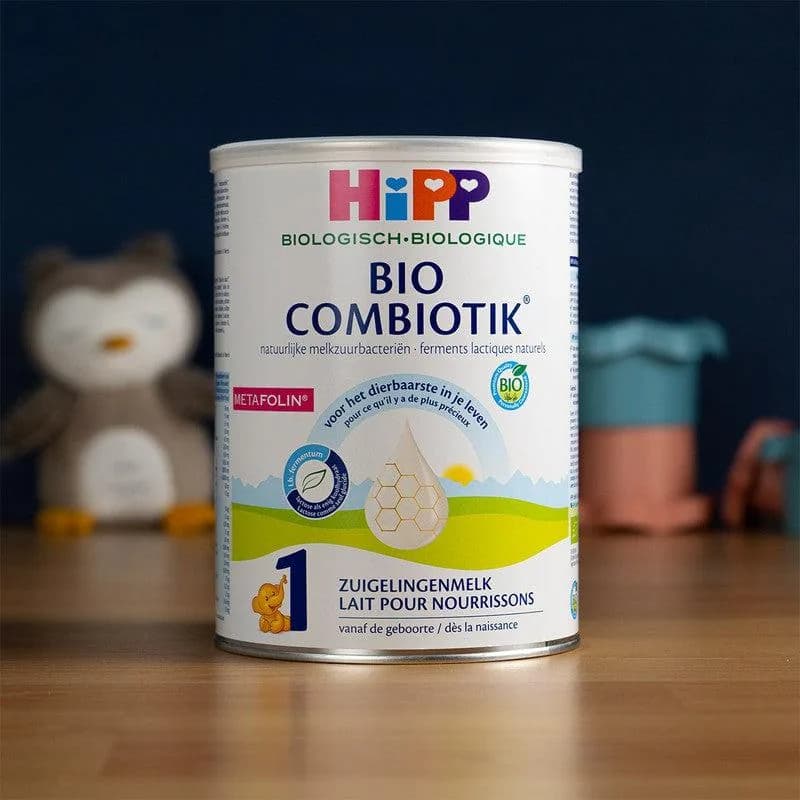
#1 · Best EU Organic with Limosilactobacillus fermentum probiotic
HiPP Dutch Stage 1
EU Organic Combiotik flagship. Live Limosilactobacillus fermentum hereditum CECT5716, a Lactobacillus-family strain originally isolated from human breast milk with clinical evidence for term-infant gut microbiome modulation and respiratory infection reduction. Plus GOS prebiotic plus Metafolin bioactive folate. RSPO palm in fat blend, no soy. ~$1.77/oz delivered via Organic's Best Shop.
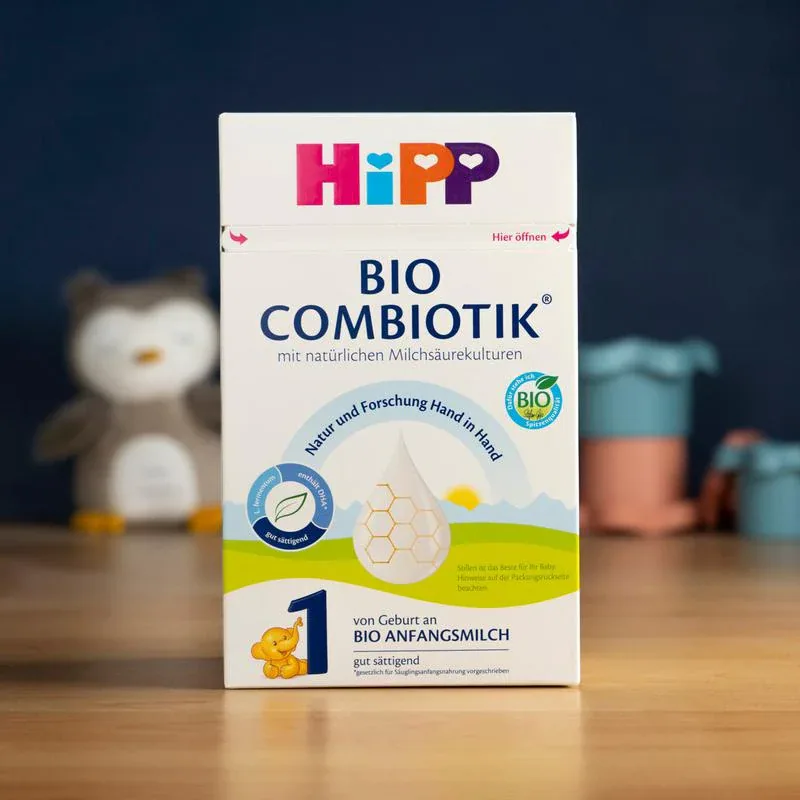
#2 · Best EU Organic with Bifidobacterium lactis BB-12
HiPP German Stage 1
EU Organic plus German Bio overlay. Live Bifidobacterium lactis BB-12, a Bifidobacterium-family strain with extensive clinical evidence in both adult and infant uses for gut microbiome support and immune-system effects. Plus GOS prebiotic. Folic acid (not Metafolin). RSPO palm, no soy. ~$1.94/oz delivered.
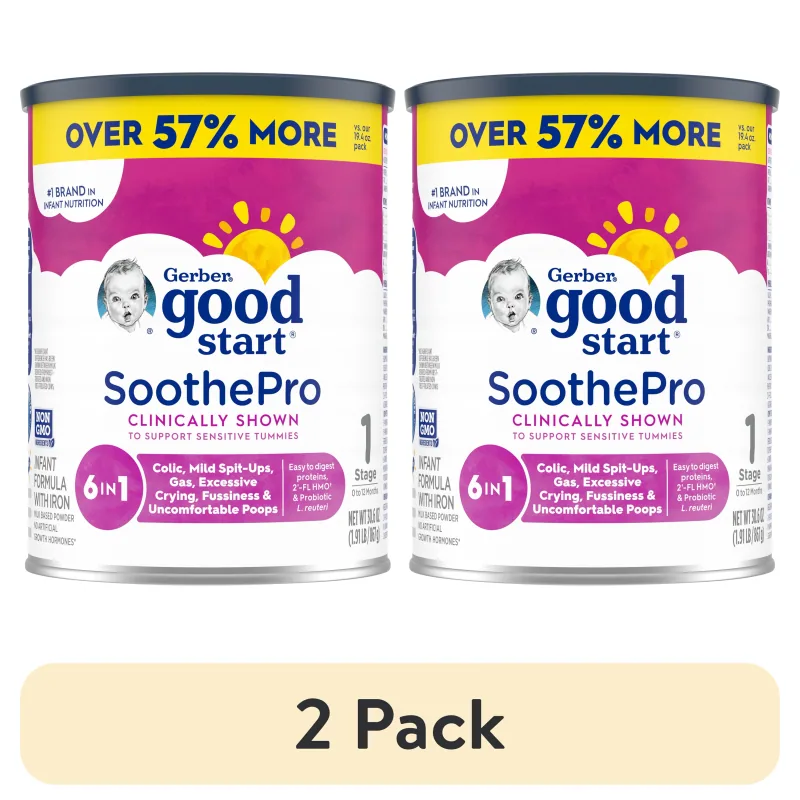
#3 · Best US-retail probiotic-fortified pHF formula
Gerber Good Start SoothePro
US-domestic Nestlé. Partially hydrolyzed 100% whey + lactose-secondary carbohydrate + 2'-FL HMO + B. lactis Bb-12 live probiotic. The principal US-retail formula combining pHF protein hydrolysis with HMO and probiotic. Palm and soy in fat blend. ~$1.90/oz at broad US retail.
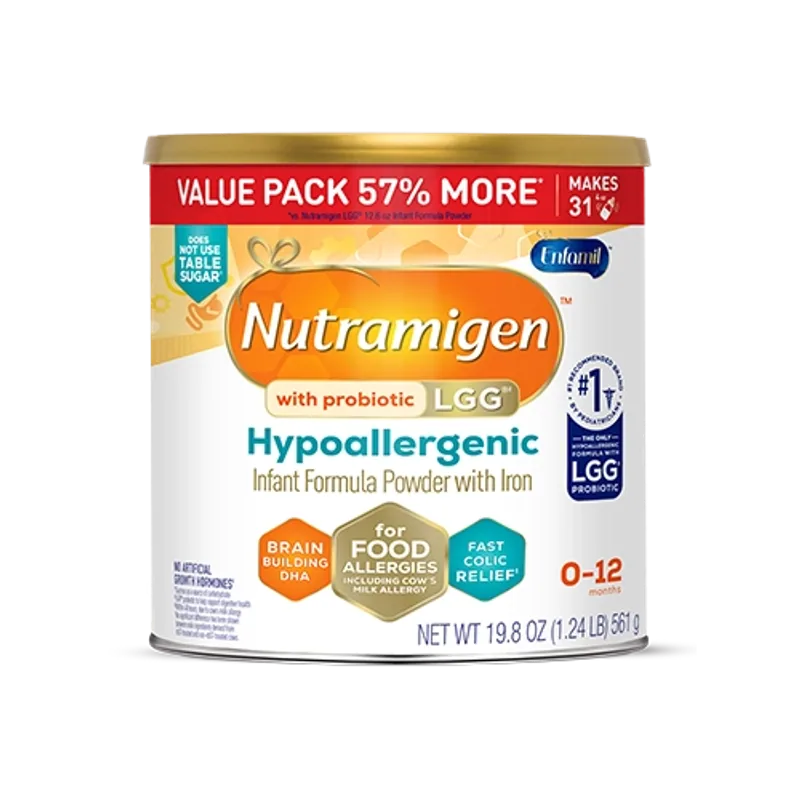
#4 · Best CMPA-indicated probiotic formula (eHF)
Nutramigen with LGG
Reckitt extensively hydrolyzed casein with Lactobacillus rhamnosus GG (LGG) probiotic, a clinically-documented strain for CMPA management. FDA Hypoallergenic 21 CFR 107.30 exempt formula for diagnosed cow milk protein allergy. The only US-retail eHF combining the hydrolyzed-casein protein structure with LGG probiotic. Pediatrician-prescribed for diagnosed CMPA. ~$5/oz at pharmacy.