
Best Baby Formula for Constipation, 2026 Buying Guide
Last updated 2026-04-26 · facts verified · María López Botín · not a doctor, contains a paid link to Organic's Best Shop
Infant constipation in formula-fed infants, typically defined as hard, dry, painful-to-pass stools rather than infrequent stools alone, affects approximately 15-30% of formula-fed infants at some point in the first year. The first-line management is typically not a formula switch; it is hydration assessment (correct dilution ratio, adequate total daily volume), and pediatrician consultation to rule out functional constipation requiring specific intervention.
That said, prebiotic-rich formulas, those including GOS, FOS, or 2'-FL HMO, have published clinical evidence for softer stool consistency and reduced constipation incidence in formula-fed infants. This guide ranks the formulas with the strongest prebiotic profile plus the alternative interventions most commonly recommended by pediatricians for the constipation indication.
For formula-fed constipation, the six-pick framework: HiPP Dutch for synbiotic Combiotik (probiotic + GOS); Kendamil Organic for whole-milk-fat plus 2'-FL HMO plus GOS+FOS dual prebiotic; Gerber Good Start GentlePro for US-retail synbiotic; Kabrita for goat-milk softer-curd preference; HiPP HA for partially hydrolyzed plus probiotic; Earth's Best for USDA Organic + FOS budget option. Hydration check first, formula switch second.
Hydration and dilution before formula switching
The first-line clinical assessment for constipation in formula-fed infants is verifying correct formula preparation and adequate hydration. AAP and NASPGHAN both prioritize hydration assessment before recommending a formula switch.
Verify correct dilution ratio. Formula manufacturers specify exact powder-to-water ratios. Over-concentration (more powder than specified) is the most common cause of formula-fed constipation, the higher solute load draws water out of the GI tract and dries stool. Re-read your formula's preparation instructions, and use a proper measuring scoop or scale to verify ratio accuracy.
Verify total daily volume. AAP guidance on formula volume per body weight (approximately 2.5 oz per pound per day, divided across feeds, for infants under 6 months) should be met. Under-feeding increases constipation risk. Track total daily intake for 3-4 days to verify the volume is in range.
Verify water source quality. Fluoride content over 0.7 mg/L, sodium content over 200 mg/L, or hard water with high mineral content can affect stool consistency. CDC recommends low-fluoride, low-sodium water (filtered tap or specifically labeled bottled water) for infant formula preparation.
When dilution and volume are verified correct and constipation persists, formula intervention with prebiotic-rich options is the defensible next step.
The ranking
1. Best probiotic + GOS formula: HiPP Dutch Stage 1
HiPP Dutch Stage 1 is the EU Organic Combiotik flagship combining live Limosilactobacillus fermentum hereditum probiotic with GOS prebiotic, the synbiotic combination has the strongest published evidence base for softer stool consistency in formula-fed infants. Lactose-only carbohydrate (EU mandatory; lactose itself contributes to softer stools relative to maltodextrin or corn-syrup-solids carbohydrate bases). Personally imported via Organic's Best Shop.
2. Best whole-milk-fat + dual prebiotic: Kendamil Organic Stage 1
Kendamil Organic combines whole-cow-milk-fat preservation (native MFGM, natural sn-2 palmitate) with 2'-FL HMO plus GOS+FOS dual prebiotic blend. The whole-milk-fat foundation supports gut motility differently than all-vegetable-oil blends, and the dual prebiotic adds soluble fiber that softens stool consistency. EU plus UK Soil Association Organic, no added palm, no soy. FDA- registered for US retail at next-day delivery.
3. Best US-retail synbiotic: Gerber Good Start GentlePro
Gerber Good Start GentlePro is the US-domestic synbiotic option: whey-based partially hydrolyzed with 2'-FL HMO and Bifidobacterium lactis probiotic. The pHF-plus-HMO-plus-probiotic combination at FDA-registered US retail without import logistics. Often the master default for families wanting the synbiotic mechanism without EU- import complexity.
4. Best goat-milk option: Kabrita Stage 1
Kabrita Stage 1 delivers Dutch goat-milk with 2'-FL HMO plus GOS prebiotic. Goat-milk has smaller fat globules and forms softer curd in the stomach than cow-milk, anecdotally helpful for constipation in non-allergic infants. The 60:40 whey:casein ratio matches breast- milk reference. NOT a substitute for diagnosed CMPA. FDA-enforcement- discretion US retail.
5. Best partially hydrolyzed: HiPP HA Stage 1
For families exploring whether protein hydrolysis correlates with their infant's constipation pattern, HiPP HA delivers partially hydrolyzed whey with EU Organic certification, GOS prebiotic, and live Limosilactobacillus fermentum hereditum probiotic. The combination of pHF and synbiotic is rare. NOT for diagnosed CMPA. Personally imported via Organic's Best.
6. Best USDA Organic budget option: Earth's Best Dairy
Earth's Best Dairy delivers USDA Organic plus Non-GMO Project plus FOS prebiotic at the cheapest USDA Organic price point at US retail. Broad availability (Target, Walmart, Whole Foods, Amazon, grocery) plus WIC eligibility in many states. The FOS prebiotic supports softer stool consistency at the budget tier without requiring EU-import logistics or premium pricing. Palm and soy in fat blend.
Practical considerations for constipation management
Track stool patterns. Document baseline stool frequency and consistency for 3-7 days before any formula switch. Use the Bristol Stool Scale (or the pediatric "Brussels" infant version) to characterize stool form objectively. After switching, re-track for 2 weeks. This avoids the common pattern of attributing improvement to formula when normal stool variability or developmental motility maturation is the actual cause.
Hydration first, every time. Verify correct dilution, adequate volume, and water source quality before considering a formula switch. Approximately 50% of formula-fed constipation cases resolve with hydration correction alone within 1-2 weeks.
Add water cautiously. AAP recommends NOT adding extra water to infant bottles for constipation, over-dilution disrupts the formula's nutritional balance and can cause water intoxication in young infants. For older infants past 4-6 months, pediatric supervision can authorize small volumes (1-2 oz) of water between feeds. Don't self-prescribe water supplementation without pediatric input.
Prune juice (older infants only). For infants past 4-6 months with constipation persisting despite formula optimization, pediatricians sometimes recommend small volumes of pasteurized prune juice (typically 1-2 oz/day diluted with water) as an adjunct. Not appropriate for younger infants. Pediatric guidance specific to your infant's age and weight is essential.
Severe constipation needs pediatric evaluation. Persistent constipation past 2-4 weeks of formula intervention plus hydration correction warrants pediatric consultation. Functional constipation, Hirschsprung's disease, hypothyroidism, and other conditions are diagnostic possibilities requiring evaluation. Don't manage severe constipation with continued formula experimentation alone.
How prebiotic mechanisms work in formula-fed infants
The biological rationale for prebiotic intervention in formula-fed constipation is well-characterized. Understanding the mechanism helps families select among the prebiotic-rich options and set realistic expectations for the timeline and effect size.
GOS (galacto-oligosaccharides). GOS reaches the colon largely undigested and is fermented by Bifidobacterium species, producing short-chain fatty acids (acetate, propionate, butyrate) that lower colonic pH, soften stool consistency, and stimulate peristalsis. The 9:1 GOS:FOS blend used in many EU formulas (Kendamil, HiPP) was designed to mimic the mixed-prebiotic profile of breast milk's complex oligosaccharides. Clinical evidence base is robust: multiple randomized trials support softer stool consistency vs prebiotic-free formula.
FOS (fructo-oligosaccharides). FOS is similarly resistant to upper-GI digestion and is fermented in the colon. FOS preferentially supports Bifidobacterium growth and acts synergistically with GOS, the combination has additive evidence for stool consistency benefit. FOS alone (used in Earth's Best, Bobbie Original) has moderate evidence; the combination with GOS has stronger evidence.
2'-FL HMO (2'-Fucosyllactose Human Milk Oligosaccharide). 2'-FL is the most abundant HMO in breast milk and is now bioidentically synthesized for inclusion in many premium formulas (Kendamil Organic, Bobbie Original, Gerber Good Start GentlePro, Kabrita, Similac Pro-Advance). 2'-FL acts both as a prebiotic, fermented by Bifidobacterium infantis, and as a direct anti-pathogen decoy molecule binding to gut pathogens before they can adhere. The clinical evidence is growing rapidly, with effect sizes for stool consistency comparable to GOS+FOS.
Lactose itself contributes. EU regulation 2016/127 mandates lactose as the primary carbohydrate in Stage 1 formulas. Lactose is partially fermented in the colon by infant microbiota, small amounts contribute to softer stools relative to maltodextrin or corn-syrup-solids carbohydrate bases. EU formulas (HiPP, Holle, Kendamil EU) have a structural advantage here over US formulas that use significant maltodextrin or corn-syrup-solids.
Probiotic synergy. When prebiotics are paired with documented probiotic strains (HiPP Dutch with Limosilactobacillus fermentum; Gerber Good Start GentlePro with Bifidobacterium lactis), the synbiotic combination has additive evidence over prebiotic-only formulas. The probiotic provides the bacterial substrate; the prebiotic provides the food.
Realistic timelines. Prebiotic-driven stool-consistency improvement typically appears within 7-14 days of consistent exposure at full feeding strength. Faster improvement (1-3 days) is unusual and often reflects placebo or normal variation. Improvement persisting past the 2-week trial window is the defensible signal.
Effect-size honesty. Prebiotic formulas don't transform constipated infants into perfectly-pooping infants. The clinical trials show modest-but-meaningful improvement in stool consistency scores and reduced incidence of hard-stool episodes. Expectations should be calibrated to "improvement" rather than "cure."
Cumulative effects with hydration optimization. The largest practical effect for formula-fed constipation comes from combining hydration correction (verified dilution, adequate volume) with a prebiotic-rich formula. Either intervention alone produces partial benefit; both together produce the strongest practical improvement most families experience. Skip neither layer.
Frequently asked questions
Why does my baby get constipated on formula?
Will adding water to my baby's formula help with constipation?
Is goat-milk formula better for constipation?
What prebiotic ingredient is most effective for constipation?
Should I switch from milk-based to soy formula for constipation?
How long should I try a new formula before deciding it didn't help with constipation?
When should I see a pediatrician about my baby's constipation?
FDA 21 CFR Part 107, AAP formula-feeding guidance, and NASPGHAN clinical resources provide the regulatory and clinical foundation for infant constipation management. The PubMed prebiotic-and-constipation literature catalogs the published trials supporting GOS, FOS, and 2'-FL HMO intervention in formula-fed cohorts.
Related reading
- Infant microbiome and formula choice pillar
- Water for baby formula pillar
- Best formulas with probiotics
- Best formula for colic
- GOS explainer
- 2'-FL HMO explainer
- Infant Constipation, Formula vs Non-Formula Causes
This site provides research and comparisons, not medical advice. Consult your pediatrician before changing your baby's formula.
The ranked picks
Typical US retail price, normalised to USD per ounce of powder. Imported European formulas carry shipping and importer margin; US retail brands are typically cheapest per ounce. Subscribe-and-save and private-label pricing can shift the ranking.
Data table
| Formula | Price per ounce |
|---|---|
| Gerber Good Start GentlePro | $1.13 |
| Earth's Best Dairy | $1.29 |
| HiPP Dutch Stage 1 | $1.77 |
| Kendamil Organic Stage 1 | $1.95 |
| HiPP HA Stage 1 | $2.03 |
| Kabrita Stage 1 | $2.71 |
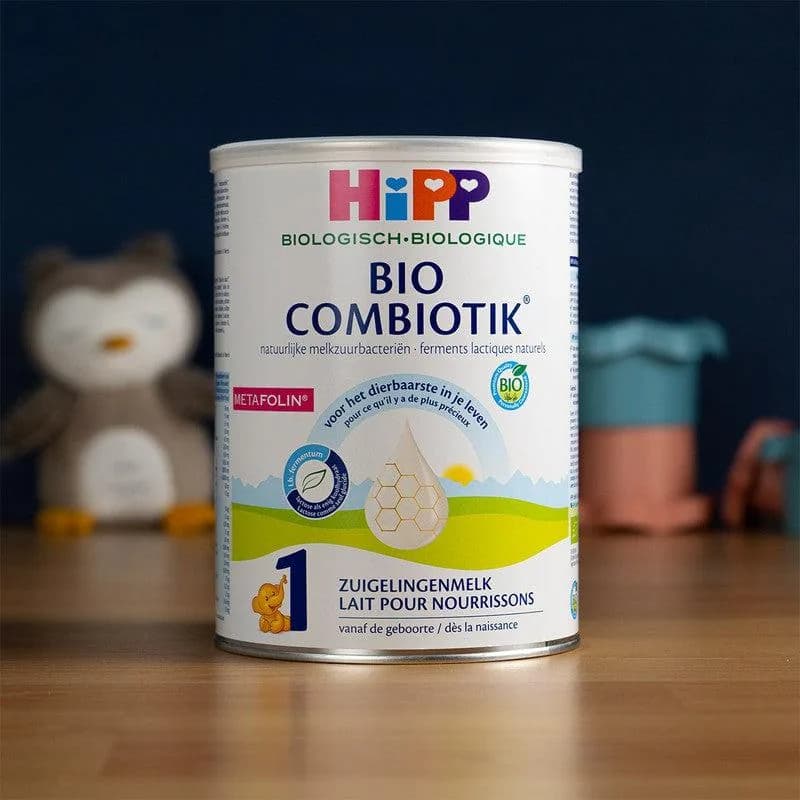
#1 · Best probiotic + GOS formula for constipation
HiPP Dutch Stage 1
EU Organic Combiotik with live Limosilactobacillus fermentum hereditum probiotic plus GOS prebiotic, the synbiotic combination supports softer stool consistency in formula-fed infants. Lactose-only carbohydrate. Personally imported via Organic's Best. ~$1.77/oz.
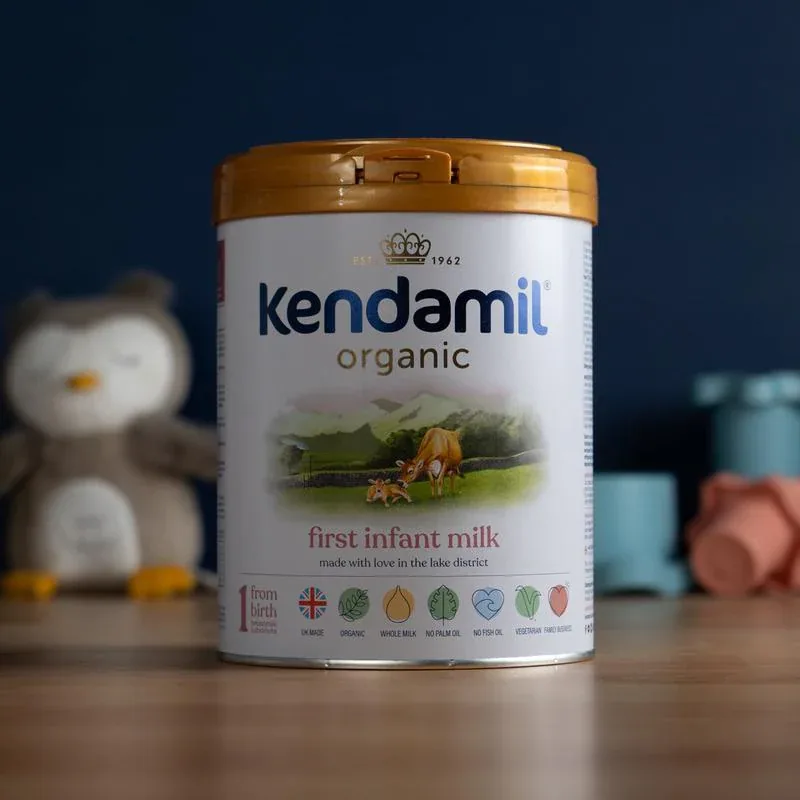
#2 · Best whole-milk-fat + GOS+FOS for constipation
Kendamil Organic Stage 1
EU + UK Organic with whole-cow-milk-fat plus 2'-FL HMO plus GOS+FOS prebiotic blend. The combination of native MFGM plus dual prebiotic supports gut motility and softer stools. No added palm. FDA-registered for US retail. ~$1.95/oz.

#3 · Best US-retail prebiotic + probiotic for constipation
Gerber Good Start GentlePro
Whey-based partially hydrolyzed with 2'-FL HMO and Bifidobacterium lactis probiotic. The synbiotic combination at FDA-registered US retail without import logistics. ~$1.75/oz.
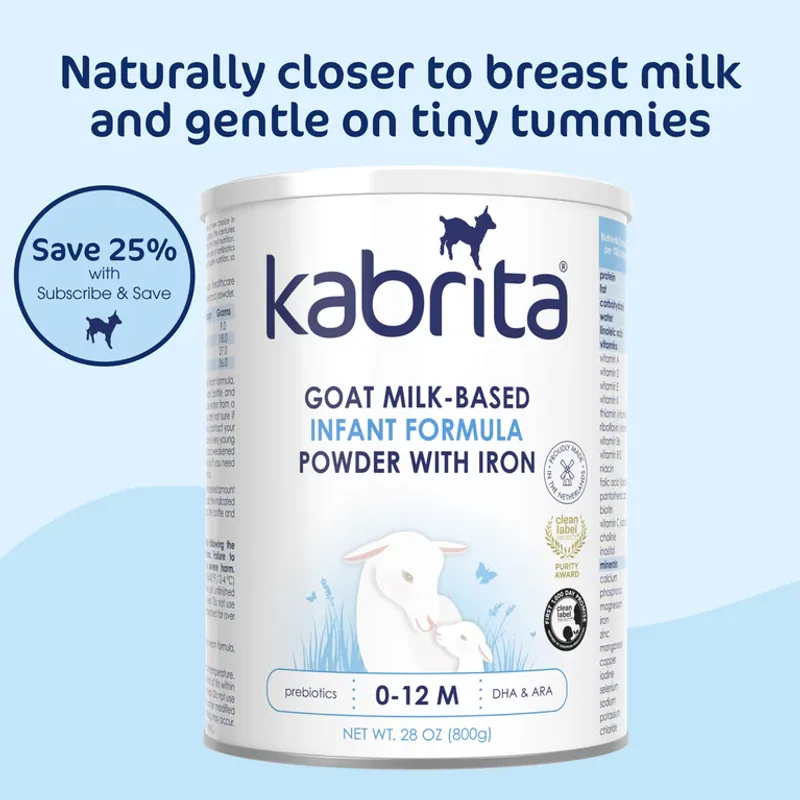
#4 · Best goat-milk option for constipation
Kabrita Stage 1
Dutch goat-milk Stage 1 with 2'-FL HMO plus GOS. Goat-milk has smaller fat globules and softer curd than cow-milk, anecdotally cited for reduced constipation. NOT a substitute for diagnosed CMPA. FDA-enforcement-discretion US retail. ~$2.71/oz.
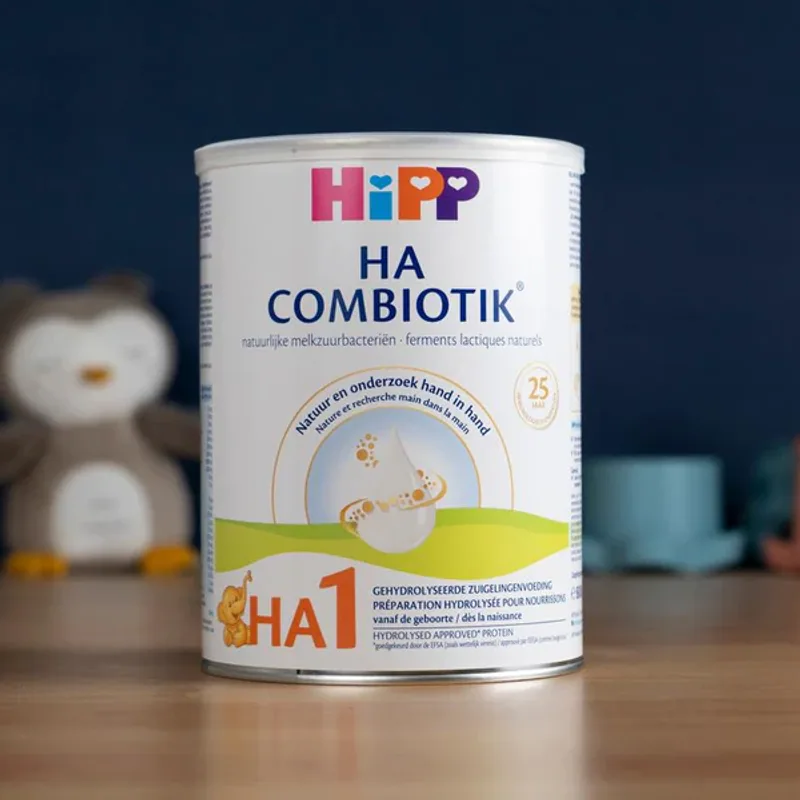
#5 · Best partially hydrolyzed for constipation
HiPP HA Stage 1
EU Organic partially hydrolyzed whey with GOS prebiotic and live probiotic. The protein hydrolysis plus probiotic axis for non-allergic infants with constipation correlated to standard formula. Personally imported via Organic's Best. ~$1.85/oz.
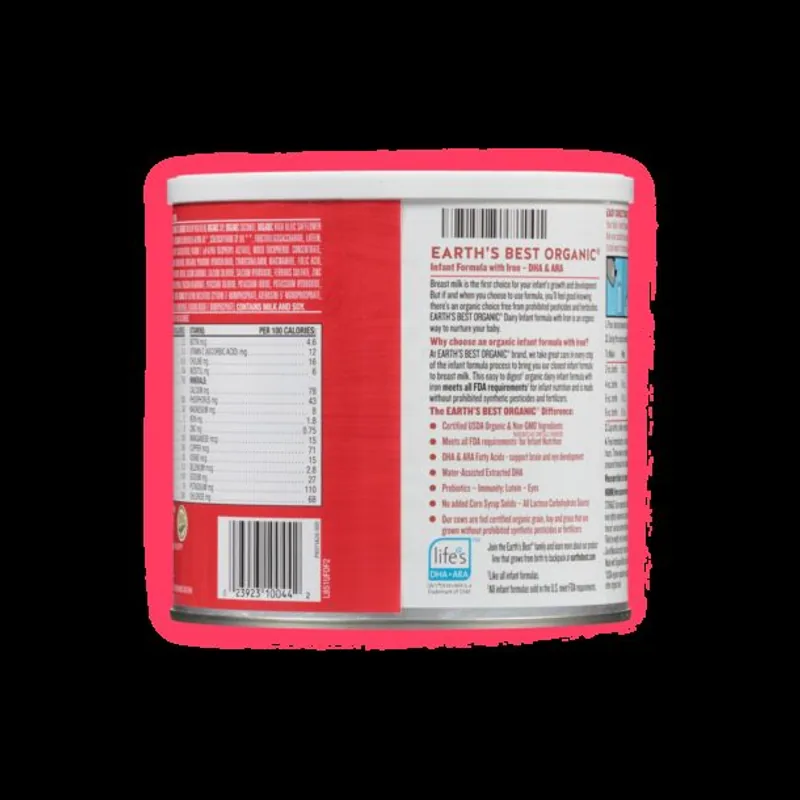
#6 · Best USDA Organic + FOS for budget-conscious constipation
Earth's Best Dairy
USDA Organic plus Non-GMO Project plus FOS prebiotic at the cheapest USDA Organic price point. WIC-eligible in many states. The budget-conscious prebiotic option for constipation management. ~$1.29/oz.