
Best Baby Formula for Colic, 2026 Buying Guide
Last updated 2026-04-26 · facts verified · María López Botín · not a doctor, contains a paid link to Organic's Best Shop
Colic, defined clinically as inconsolable crying for at least 3 hours per day, at least 3 days per week, for at least 3 weeks in an otherwise healthy infant, affects approximately 10-25% of infants during the 0-3 month period and typically resolves spontaneously by 3-4 months of age. The clinical literature does not converge on a single cause, and formula choice is rarely the principal driver of colic. Most formula-fed colicky infants improve over the same timeline as breastfed colicky infants regardless of formula intervention.
That said, certain formula features have published evidence for modest improvement in colicky infants, specifically probiotic strains (especially Lactobacillus reuteri and Limosilactobacillus fermentum) and partially hydrolyzed protein. This guide ranks the formulas with the most defensible evidence base for the colic indication.
For colicky infants in the 0-3 month window, the six-pick framework: HiPP Dutch for EU Organic Combiotik probiotic; Enfamil Gentlease for US-retail pHF default; Gerber Good Start GentlePro for whey-pHF alternative; Kabrita for goat-milk preference; HiPP HA for EU pHF
- probiotic; Kendamil Organic for whole-milk-fat with native MFGM. Most colic resolves by 3-4 months regardless of formula choice.
What the colic literature actually supports for formula choice
The evidence base for formula intervention in colic is mixed. The NASPGHAN and AAP positions both emphasize that colic is typically self-limiting and resolves by 3-4 months without specific formula intervention in the majority of cases. Where evidence does support specific formula features, the effect sizes are modest and the heterogeneity across studies is significant.
Probiotic evidence. The strongest evidence is for Lactobacillus reuteri DSM 17938 in breastfed infants, the primary probiotic-and-colic clinical trial base is breastfed-population data. For formula-fed infants, the evidence is weaker but suggestive: Limosilactobacillus fermentum hereditum (HiPP Dutch) and Lactobacillus rhamnosus GG (Nutramigen) both have published clinical data on infant comfort outcomes.
Partially hydrolyzed protein evidence. Partially hydrolyzed formulas (Enfamil Gentlease, Gerber Good Start GentlePro, HiPP HA) have modest clinical evidence for reducing crying time in colicky formula-fed infants. The mechanism is theorized to be easier protein digestion reducing gas formation. The effect size is meaningful but not transformative.
Goat-milk anecdotal evidence. Goat-milk formulas (Kabrita, Holle Goat, Jovie Goat) have softer curd formation in the stomach than cow-milk, anecdotally cited by families as helpful for colic in non-allergic infants. The clinical evidence is sparse, but the mechanism is biologically plausible. NOT a substitute for diagnosed CMPA.
What does NOT have strong evidence. Switching to soy formula is not supported as a colic intervention. Switching to lactose-free formula is not supported (true infant lactose intolerance is rare). Switching to extensively hydrolyzed (eHF) for non-CMPA colic is not supported and is significantly more expensive than alternatives.
The ranking
1. Best probiotic formula for colic: HiPP Dutch Stage 1
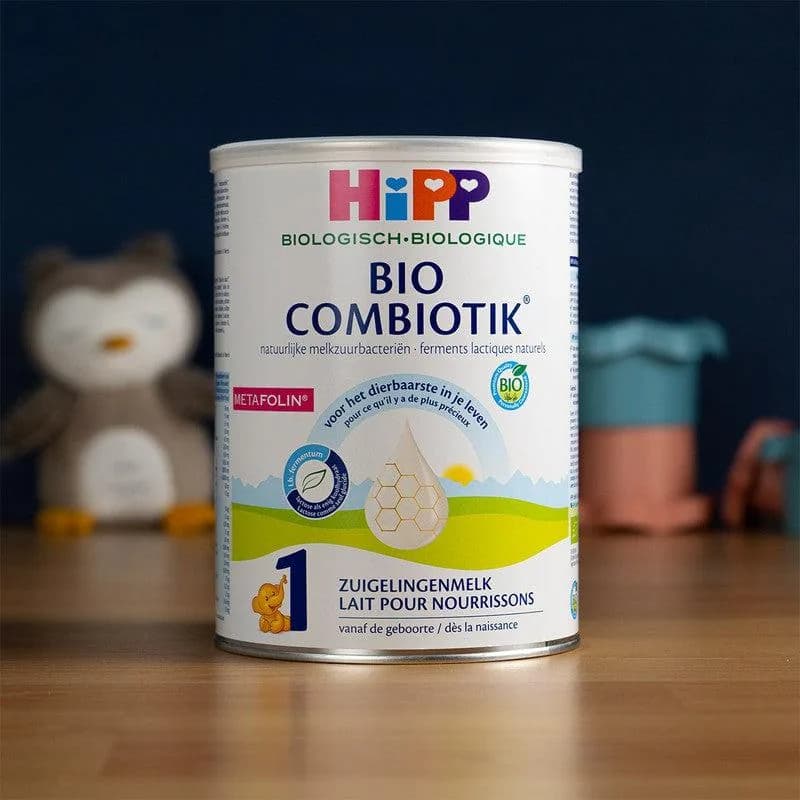
HiPP Dutch Stage 1 is the EU Organic Combiotik flagship with live Limosilactobacillus fermentum hereditum probiotic, the only mainstream EU-imported cow-milk Stage 1 formula delivering a documented live probiotic strain. For colicky infants in the 0-3 month window, the probiotic-included EU Organic formula is the strongest evidence-based starting point. Lactose-only carbohydrate (EU mandatory), GOS prebiotic, Metafolin bioactive folate. Personally imported via Organic's Best Shop.
2. Best US-retail comfort formula: Enfamil Gentlease
Enfamil Gentlease is the most-prescribed comfort formula in US pediatric practice for colic-related fussiness and has the largest clinical evidence base among US-domestic comfort formulas. Partially hydrolyzed milk-based protein with reduced lactose. FDA-registered, broad retail availability (Target, Walmart, Amazon, grocery), no prescription required.
For families wanting the comfort positioning at FDA-registered US retail without import logistics, Enfamil Gentlease is the master default.
3. Best alternative US comfort formula: Gerber Good Start GentlePro
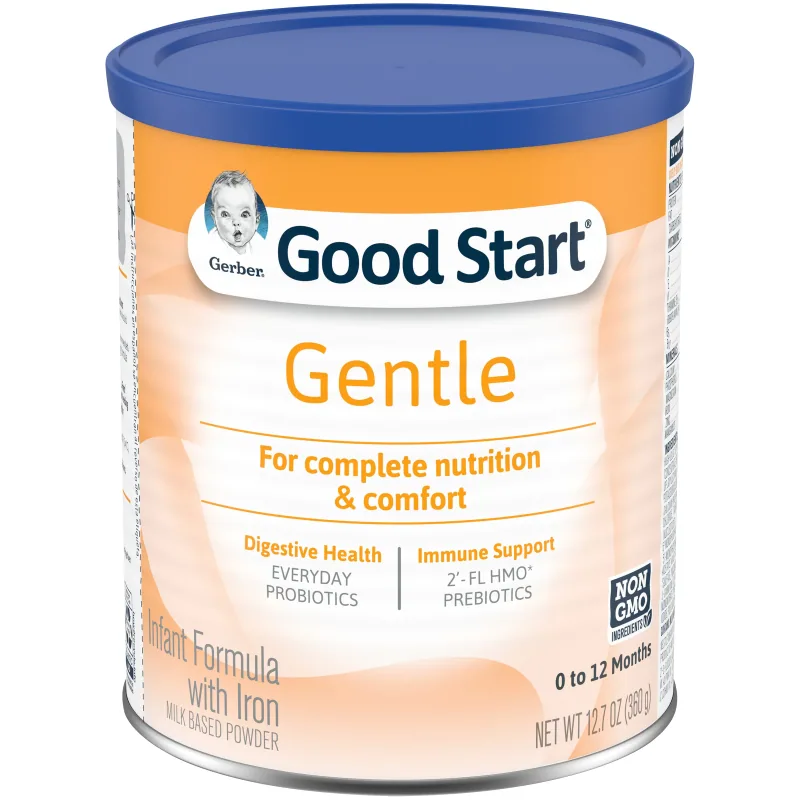
Gerber Good Start GentlePro is a whey-based partially hydrolyzed formula with 2'-FL HMO and Bifidobacterium lactis probiotic, the combination of whey-pHF plus HMO plus probiotic is unique among US-retail comfort formulas. For colicky infants who don't respond to milk-based pHF (Enfamil Gentlease), the whey-pHF alternative is the principal swap.
4. Best goat-milk for colic preference: Kabrita Stage 1
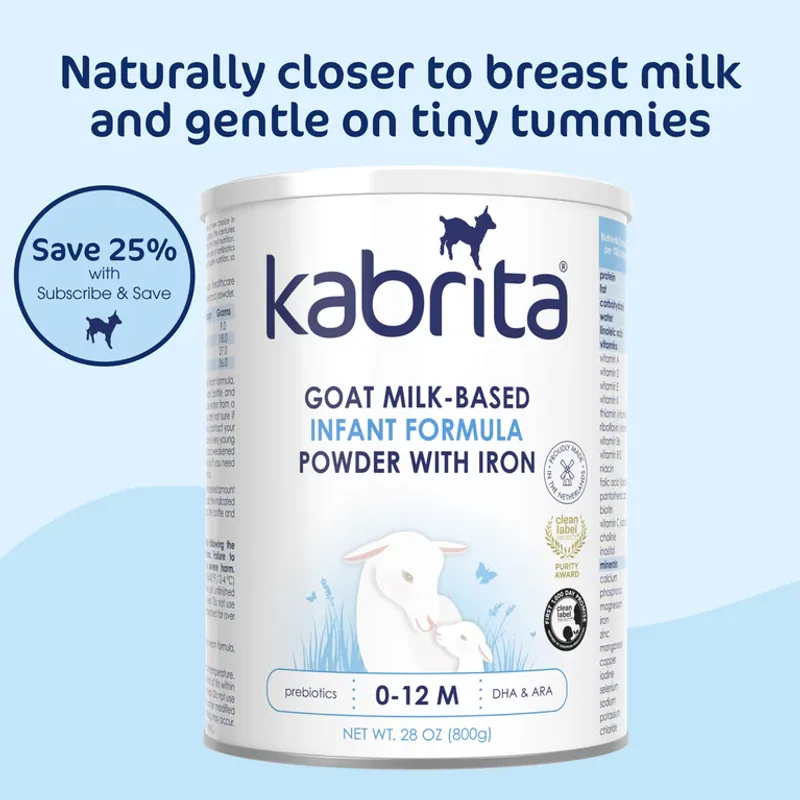
Kabrita Stage 1 is the only goat-milk Stage 1 with 2'-FL HMO at US-accessible distribution. Goat-milk forms softer curd in the stomach and has smaller fat globules than cow-milk, anecdotally reported as easier on colicky infants in non-allergic cases. With sn-2 palmitate plus rapeseed and sunflower oils (no soy), GOS prebiotic. FDA-enforcement-discretion US retail.
Critical: goat-milk formula is NOT a substitute for diagnosed CMPA, goat milk proteins cross-react with cow milk proteins in ~90% of CMPA cases. For CMPA-suspected colic, escalate to extensively hydrolyzed (eHF) formula under pediatric supervision, not goat-milk.
5. Best EU partially hydrolyzed for colic: HiPP HA Stage 1
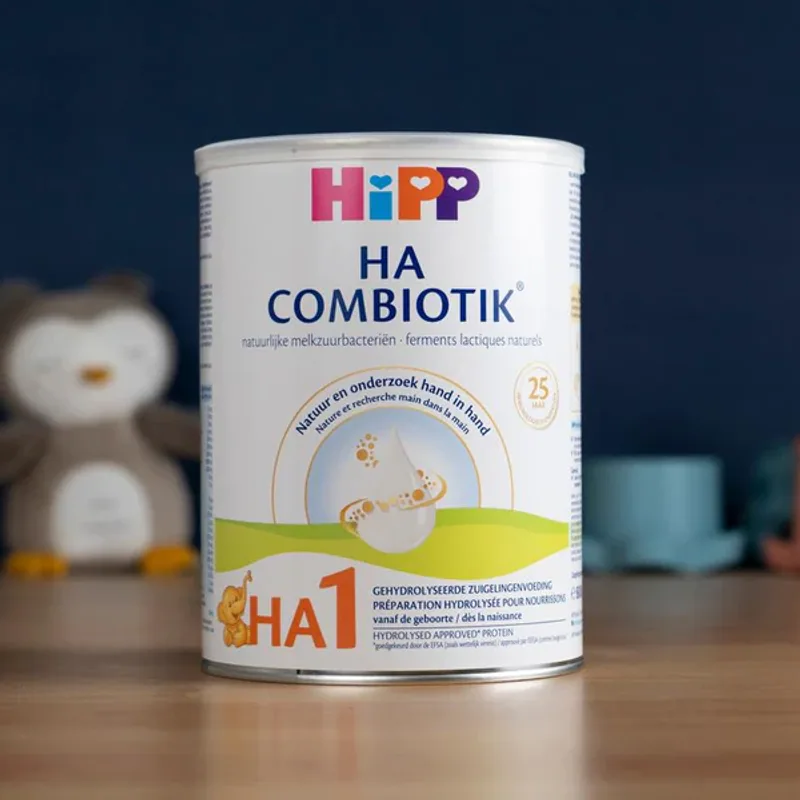
HiPP HA Stage 1 combines partially hydrolyzed whey with EU Organic certification, GOS prebiotic, and live Limosilactobacillus fermentum hereditum probiotic, the rare combination of pHF plus documented probiotic strain. For families wanting both the protein hydrolysis comfort axis and the probiotic axis simultaneously, HiPP HA is the differentiated EU pick. Personally imported via Organic's Best.
6. Best whole-milk-fat alternative: Kendamil Organic Stage 1
For families exploring whether fat-blend composition correlates with their infant's colic, Kendamil Organic delivers whole-cow-milk-fat preservation, including native MFGM (sphingomyelin, cholesterol, gangliosides, and ~150 proteins implicated in gut maturation and signaling). EU plus UK Soil Association Organic, no added palm, no soy, FDA-registered for US retail.
Practical considerations for colic management
Colic typically resolves by 3-4 months. This is the most important fact for families managing infant colic. The motility, gut microbiome, and neurological-development trajectories that drive colic in the 0-3 month period mature toward resolution spontaneously. Formula intervention can modestly help; time is the principal cure.
Single-formula trials, 2-week windows. When testing whether a specific formula helps colic, a 2-week trial under pediatric guidance is the standard. Track baseline crying time (minutes per day, days per week meeting the 3+ hour threshold) before switching, then assess at 2 weeks. Avoid switching formulas weekly, the underlying signal is hard to read with too-frequent intervention.
Probiotic adjuncts. Some pediatricians recommend infant probiotic drops (Gerber Soothe, BioGaia ProTectis, others delivering Lactobacillus reuteri DSM 17938) as an adjunct to standard formula rather than switching formulas entirely. The clinical evidence for L. reuteri is stronger than the evidence for formula switching specifically; combining a standard formula with probiotic drops is a defensible alternative path.
Rule out the alternatives. Persistent severe crying past 3-4 weeks of life with poor weight gain, blood in stool, severe back- arching, or eczema warrants pediatric evaluation for CMPA, GERD, or other diagnostic possibilities. Don't manage suspected CMPA as colic, escalate to eHF under pediatric supervision.
Lifestyle layer. Burping technique, paced bottle feeding, slow-flow nipples reducing air intake, tummy-down positioning during non-sleep wake windows, and consistent nightly routines all contribute to colic management independent of formula choice. Some families find these adjustments have larger effect sizes than formula switching.
How colic differs from CMPA, reflux, and other diagnoses
Distinguishing colic from other conditions presenting with infant crying is essential because the management paths diverge substantially. The clinical diagnostic process, typically led by a pediatrician, uses several distinguishing features to separate true colic from CMPA, GERD, lactose intolerance, and other possibilities.
Colic is typically isolated crying. True colic presents as inconsolable crying meeting the rule-of-threes pattern in an otherwise thriving infant. Weight gain is normal, stooling is normal, no blood/mucus in stool, no eczema, no recurrent vomiting, no failure to thrive. If your infant has any of these "red-flag" symptoms in addition to crying, the diagnostic possibility is not isolated colic.
CMPA presents with multi-system symptoms. Cow milk protein allergy presents with crying plus blood/mucus in stool, severe eczema, recurrent vomiting, or failure to thrive. The treatment is extensively hydrolyzed (eHF) or amino acid formula (AAF), not comfort or partially hydrolyzed formula. CMPA is diagnosed by elimination-and-challenge or IgE-specific testing under pediatric or allergist supervision.
GERD presents with painful regurgitation. Gastroesophageal reflux disease presents with crying plus persistent regurgitation, back-arching during or after feeds, poor weight gain, or apparent discomfort during the regurgitation event. The treatment is positional management plus possibly anti-reflux formulas (HiPP AR, Enfamil AR) or H2-blocker / PPI medication under pediatric supervision. Routine spit-up without distress is physiologic reflux, not GERD.
Lactose overload differs from lactose intolerance. True primary lactose intolerance is rare in infants under 6 months. What's more common is "lactose overload", temporary excess undigested lactose reaching the colon during a fast-flow breastfeeding pattern or during a viral GI infection causing transient lactase deficiency. Both resolve with time, not lactose-free formula. AAP does not recommend switching to lactose-free formula for general fussiness without confirmed lactose intolerance.
The overall principle: don't assume colic. Pediatric evaluation with a thorough history (crying pattern, feeding pattern, stool characteristics, growth trajectory, family allergy history) helps distinguish isolated colic from the diagnostic alternatives that require specific intervention.
Frequently asked questions
Is there a probiotic formula that helps with colic?
Will switching to soy formula help with colic?
Is goat-milk formula better for colicky babies?
How long does infant colic last?
Should I try every formula until I find one that helps with colic?
Can I add probiotic drops to a regular formula instead of switching?
When should I worry about my baby's crying and see a pediatrician?
FDA 21 CFR Part 107, AAP formula-feeding guidance, and NASPGHAN clinical resources provide the regulatory and clinical foundation for infant comfort and colic management. The PubMed probiotic-and-colic literature catalogs the published trials supporting probiotic strains in colicky-infant cohorts.
Related reading
- Colic and formula choice pillar
- Reflux formula babies pillar
- Best formula for reflux
- Best hypoallergenic formulas
- HiPP HA vs Nutramigen
- GOS explainer
- Best Baby Formula for Constipation
This site provides research and comparisons, not medical advice. Consult your pediatrician before changing your baby's formula.
The ranked picks
Typical US retail price, normalised to USD per ounce of powder. Imported European formulas carry shipping and importer margin; US retail brands are typically cheapest per ounce. Subscribe-and-save and private-label pricing can shift the ranking.
Data table
| Formula | Price per ounce |
|---|---|
| Gerber Good Start GentlePro | $1.13 |
| Enfamil Gentlease | $1.50 |
| HiPP Dutch Stage 1 | $1.77 |
| Kendamil Organic Stage 1 | $1.95 |
| HiPP HA Stage 1 | $2.03 |
| Kabrita Stage 1 | $2.71 |
#1 · Best probiotic formula for colic-suspected infants
HiPP Dutch Stage 1
EU Organic Combiotik with live Limosilactobacillus fermentum hereditum probiotic plus GOS prebiotic. Strongest evidence base among EU formulas for infant comfort during the colic-prone 0-3 month window. Lactose-only carbohydrate. Personally imported via Organic's Best. ~$1.77/oz.

#2 · Best US-retail comfort formula for colic
Enfamil Gentlease
FDA-registered partially hydrolyzed milk-based comfort formula with reduced lactose. Most-prescribed comfort formula in US pediatric practice for colic-related fussiness. Broad retail availability, no prescription required. ~$1.65/oz.
#3 · Best alternative US comfort formula
Gerber Good Start GentlePro
Partially hydrolyzed whey with 2'-FL HMO and probiotic Bifidobacterium lactis. Differs from Enfamil Gentlease in protein source (whey vs blend), whey-pHF may help colicky infants who don't respond to milk-based pHF. FDA-registered, broad US retail. ~$1.75/oz.
#4 · Best goat-milk formula for colic preference
Kabrita Stage 1
Dutch goat-milk Stage 1 with sn-2 palmitate plus 2'-FL HMO plus GOS. Goat-milk has smaller fat globules and softer curd than cow-milk in the stomach, anecdotally helpful for colic in non-allergic infants. NOT a substitute for diagnosed CMPA. FDA-enforcement-discretion US retail. ~$2.71/oz.
#5 · Best EU partially hydrolyzed for colic
HiPP HA Stage 1
EU Organic partially hydrolyzed whey with GOS prebiotic and live probiotic. The pHF + probiotic combination is rare in colic-positioned formulas. NOT for diagnosed CMPA. Personally imported via Organic's Best. ~$1.85/oz.
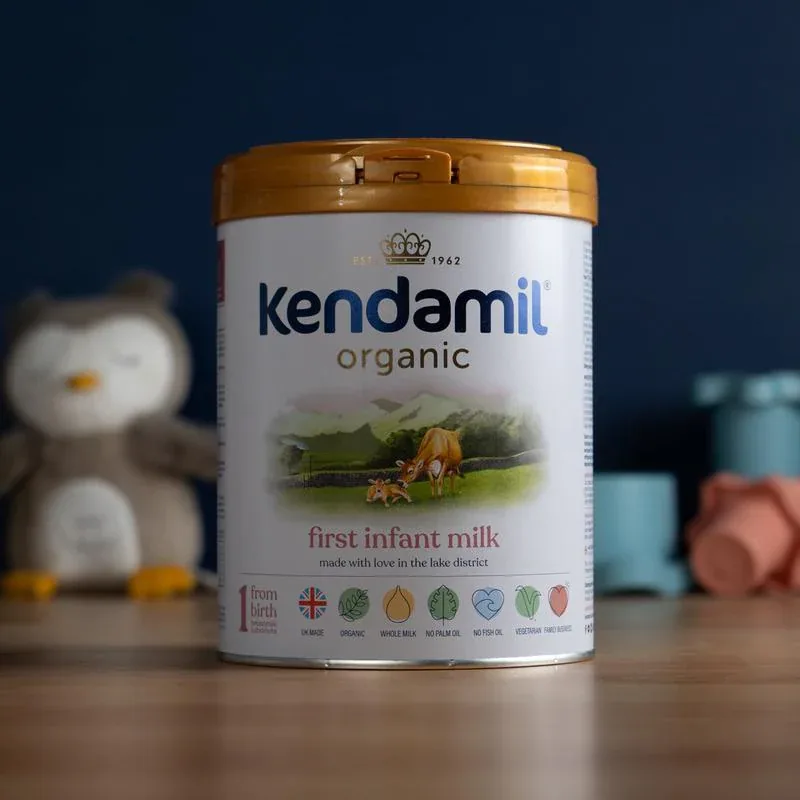
#6 · Best whole-milk-fat alternative for colic
Kendamil Organic Stage 1
Whole-cow-milk-fat preserves native MFGM with sphingomyelin, gangliosides, and ~150 proteins implicated in gut maturation and signaling. EU + UK Organic, no added palm. The whole-milk-fat alternative for families exploring fat-blend differences in colic management. ~$1.95/oz.