
Best European Baby Formulas for US Families (2026 Buying Guide)
Last updated 2026-04-25 · facts verified · María López Botín · not a doctor, contains a paid link to Organic's Best Shop
families researching European baby formulas in 2026 are choosing between roughly ten serious options imported via Organic's Best Shop plus a handful of FDA-registered European brands sold at US retail. This guide ranks them not as a single "best" but as ten different "best for X" picks organized by the use case that should drive the decision: organic certification tier, fat-blend cleanliness, bioactive depth, protein species, and price. The top three picks (HiPP Dutch, Kendamil Organic, Holle Cow) cover ~70% of US-import demand; the remaining seven serve specific structural preferences.
Ten European Stage 1 formulas serve US families. HiPP Dutch is the default: EU Organic Combiotik. The rest answer specific cases, Kendamil Organic for whole-milk fat at US retail, Holle Cow and Holle Goat for Demeter biodynamic, Loulouka for no palm and no soy, Lebenswert for Bioland minimalism, Aptamil UK as the cheapest import, Jovie and Kabrita for goat.
How to use this guide
European infant formulas reach families through three regulatory pathways: (a) FDA pre-market notification (Kendamil Classic, Kendamil Organic, Kendamil Goat, UK manufacturing with FDA-registered US retail), (b) FDA enforcement discretion at US retail (Kabrita, Dutch manufacturing, sold at Target and Amazon), and (c) FDA enforcement discretion via personal import (HiPP, Holle, Aptamil, Loulouka, Lebenswert, Jovie, sold via Organic's Best Shop and similar authorized resellers, 5-10 day shipping from EU warehouses). All three pathways are legitimate; the supply-and-cost implications differ.
The ranking that follows is not a quality ranking. All ten formulas are EU 2016/127-compliant infant formulas adequate for healthy term infants. The ranking sorts by best fit for a specific use case. Pick the entry whose "title" matches your priority.
Why European baby formulas at all?
Three structural advantages drive US-family demand for European imports:
-
Cleaner fat blends. Many European Stage 1 formulas exclude soy, exclude palm in any form, or use whole-milk-fat preservation. US mainstream formulas (Similac standard, Enfamil standard) typically contain palm oil and soy oil. See palm oil explainer.
-
Stricter organic certifications. Demeter biodynamic (Holle) and EU Organic (most others) carry standards stricter than baseline USDA Organic in some dimensions, particularly whole-farm conversion (Demeter) and dairy animal welfare. See organic certifications compared.
-
Composition mandates. EU Regulation 2016/127 mandates lactose predominance, mandatory DHA levels, and stricter upper-bound nutrient limits than FDA 21 CFR 107. The result: many European Stage 1 formulas are lactose-only added carbohydrate (no maltodextrin, no corn syrup solids) by regulation, not just by choice. See FDA vs EFSA standards compared.
The trade-off: import logistics. Most European formulas (everything except the FDA-registered Kendamil lines and Kabrita's direct US retail) require 5-10 day shipping from EU warehouses with a 2-4 week stock buffer recommended. See buying European formula in the USA for the full import logistics.
Already on a US brand? Here is the closest European match
Most parents who end up here are not starting from zero. They are already feeding a US formula and want to know what the European equivalent would be. This table maps the five most common US starting points to the European formula that changes the least while fixing the one thing you probably came here to fix.
| You currently use | Closest European match | What actually changes |
|---|---|---|
| Enfamil NeuroPro ($1.88/oz, palm and soy) | HiPP Dutch Stage 1 ($1.77/oz) | Drops soy oil, adds EU Organic, adds a probiotic and Metafolin folate. Keeps palm. Slightly cheaper. |
| Enfamil NeuroPro, if palm is the issue | Kendamil Classic Stage 1 ($1.30/oz) | Drops both palm and soy, uses whole milk fat, and raises DHA from 11.3 to 16.1 mg. Not organic. |
| Similac Pro-Advance ($1.51/oz, soy, no palm) | Aptamil UK Stage 1 ($1.42/oz) | The nearest like-for-like. Still palm-free, still contains soy oil, DHA rises to 14 mg. Cheaper. |
| Bobbie Original ($2.94/oz, USDA Organic, palm and soy free) | Kendamil Organic Stage 1 ($1.95/oz) | Almost the same spec sheet: organic, no palm, no soy, whole milk fat. Higher DHA and about a third cheaper per ounce. |
| ByHeart Whole Nutrition ($1.88/oz, whole milk fat) | Kendamil Classic Stage 1 ($1.30/oz) | Keeps the whole milk fat approach and the palm-free, soy-free profile. Adds GOS and FOS prebiotics. |
| Earth's Best Dairy ($1.29/oz, organic but palm and soy) | Holle Cow Stage 1 ($1.95/oz) | Steps up from USDA Organic to Demeter biodynamic, drops soy, raises DHA from 11 to 15 mg. Costs more. |
Two honest caveats before you switch.
Cheaper per ounce is not always cheaper. Kendamil Organic really does cost less per ounce than Bobbie, but you buy it in larger lots and you carry a two to four week stock buffer for shipping. The first order is a bigger cheque even when the unit price is lower.
The US brand is not unsafe. Every formula sold in the US meets FDA 21 CFR 107. Switching to Europe buys you a different composition philosophy, mainly around fat blends and organic certification, not a safety upgrade. If your baby is doing well, "doing well" is a good reason to stay put. Talk to your pediatrician before any switch, especially if there is a medical reason behind your current formula.
For the mechanics of changing brands without upsetting your baby's stomach, see how to switch formula brands.
The ranking
1. Best overall European import: HiPP Dutch Stage 1
HiPP Dutch Stage 1 is the European Stage 1 most-frequently chosen by families starting with European formula. It carries EU Organic certification (SKAL Dutch certifier) plus the Combiotik formulation, GOS prebiotic plus the Limosilactobacillus fermentum hereditum live probiotic strain. It includes Metafolin (bioactive L-methylfolate calcium) instead of standard folic acid. RSPO-certified palm oil is present in the fat blend; no soy.
The HiPP Group has manufactured Combiotik Stage 1 for two decades plus across European markets, and the Dutch line specifically has the longest US-import track record of any European Stage 1 formula. Supply is essentially never an issue at Organic's Best Shop. ~$1.77/oz delivered.
For families with documented MTHFR concerns, HiPP Dutch's Metafolin folate is the practical reason to pick it specifically over HiPP German (which uses standard folic acid plus Bifidobacterium lactis BB-12 instead of L. fermentum). For most families, either HiPP variant is excellent; HiPP Dutch is the more US-stocked option.
2. Best for whole-milk fat plus 2'-FL HMO: Kendamil Organic Stage 1
Kendamil Organic is structurally distinct because it combines three things rarely found in a single Stage 1 formula: EU Organic plus UK Soil Association Organic certification, whole-cow-milk-fat preservation (preserving native MFGM), and 2'-FL HMO plus GOS bioactive addition. No palm, no soy. FDA-registered for US retail since 2022 (post-Sturgis), available at Target, Amazon, us.kendamil.com without import logistics. ~$1.95/oz at US retail.
For families who would otherwise choose Kendamil Classic (the non-organic version), the ~$0.30/oz upgrade to Kendamil Organic adds EU Organic certification plus 2'-FL HMO. For families considering EU Organic options without import logistics, Kendamil Organic is the unique answer at FDA-registered US retail. See MFGM explainer and 2'-FL HMO explainer for the bioactive mechanisms.
3. Best Demeter biodynamic: Holle Cow Stage 1
For families weighting the strictest organic certification available in any infant formula globally, Holle Cow Stage 1 is the answer. Demeter biodynamic certification requires whole-farm biodynamic conversion (not parcel-by-parcel), animal welfare standards stricter than EU Organic baseline, biodynamic-method use in soil management, and high percentages of on-farm feed.
Holle's composition philosophy is intentionally minimalist: no GOS, no FOS, no HMO, no probiotic. Just EU 2016/127 mandatory nutrients plus fish-oil DHA. RSPO-certified palm oil in the fat blend, no soy. Skimmed-milk-plus-vegetable-oil construction (does not preserve whole-milk-fat MFGM). Lactose-only carbohydrate. ~$1.95/oz delivered.
For families weighting bioactive depth, Holle is not the right answer, look at HiPP Dutch (probiotic) or Kendamil Organic (HMO plus MFGM) instead. For families weighting strictest organic plus minimalist ingredient list, Holle Cow is the European Stage 1 reference.
4. Best palm-free plus soy-free EU Organic: Loulouka Stage 1
Loulouka is one of the few EU Organic Stage 1 formulas that excludes both palm and soy. The fat blend uses coconut oil, sunflower oil, and rapeseed oil, no palm in any form, no soy oil, no soy lecithin. Swiss EU Organic plus Swiss Bio certification, lactose-only carbohydrate plus GOS prebiotic. ~$1.45/oz delivered.
For families avoiding both palm and soy with an EU Organic baseline, Loulouka is the principal choice. The closest US alternative is Bobbie Original (USDA Organic, US-domestic) at higher price (~$2.94/oz) but with FDA registration plus next-day retail.
Loulouka's caveat: smaller production capacity than Holle, HiPP, or Kendamil. Supply at Organic's Best Shop has historically run thin during demand spikes. Maintain a 2-4 week stock buffer minimum, longer if Loulouka is your primary formula.
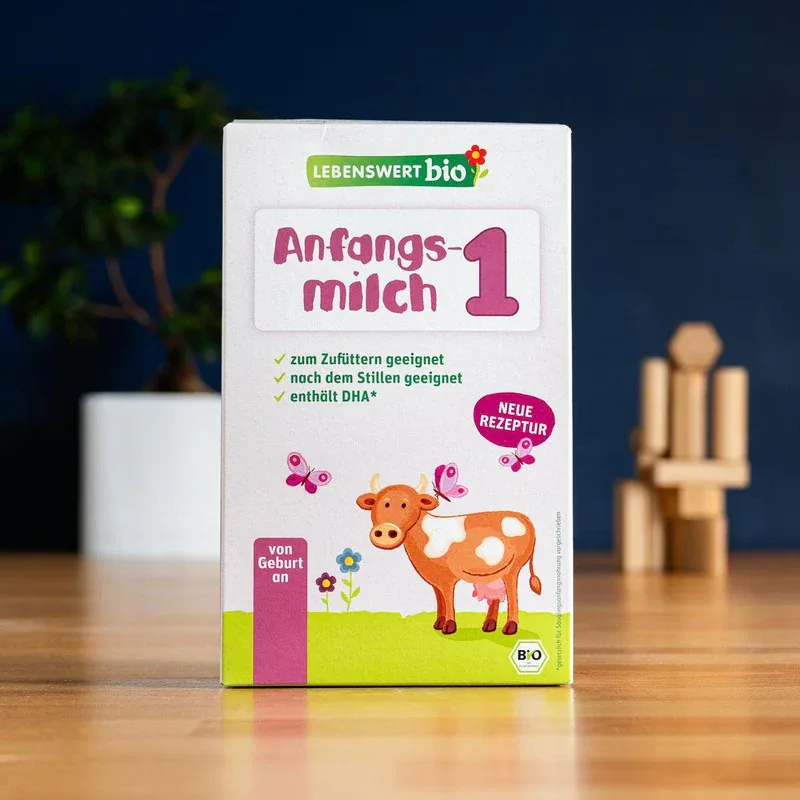
5. Best minimalist Bioland organic: Lebenswert Stage 1
Lebenswert is the Holle-manufactured Stage 1 formula carrying Bioland certification (a German organic association overlay stricter than baseline EU Organic) plus EU Organic. Composition is minimalist: no GOS, no FOS, no HMO, no probiotic. RSPO palm in the fat blend, no soy. Plant-based DHA from algal oil. Lactose-only carbohydrate. ~$1.51/oz delivered.
Lebenswert is essentially Holle's lower-price-tier line under a different certification banner. The manufacturing facility, quality control, and supply chain are shared with Holle. For families wanting the Holle ethos at lower per-ounce cost, Lebenswert is the answer within the Holle family.
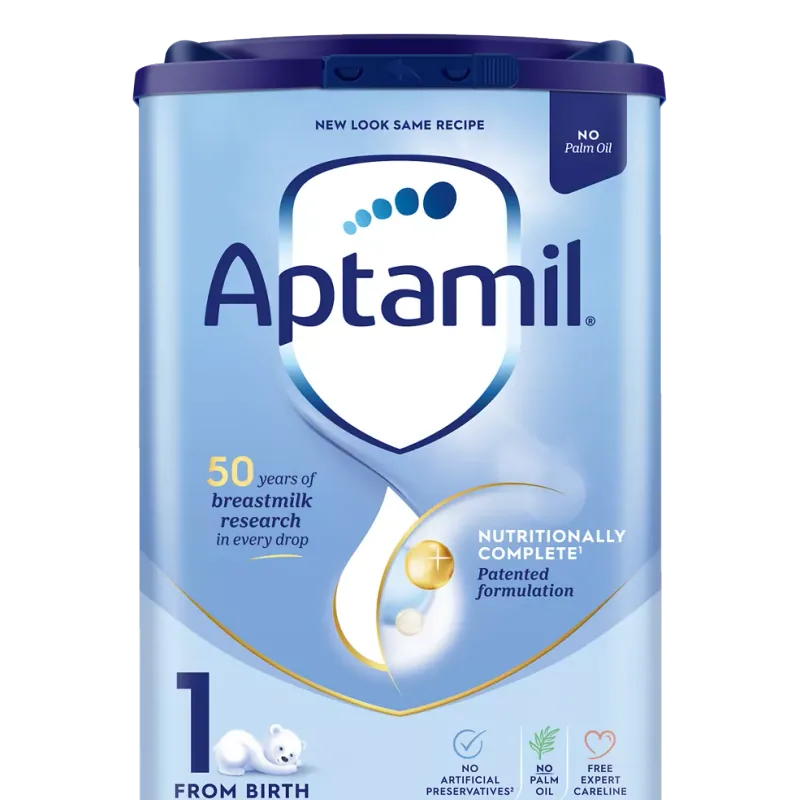
6. Best budget EU import: Aptamil UK Stage 1
Aptamil UK Stage 1 is the cheapest EU-import Stage 1 cow-milk formula at ~$1.42/oz delivered. It is non-organic Danone Aptamil, what it delivers is the EU regulatory backbone, the Danone research heritage, the GOS+FOS 9:1 prebiotic blend, the 29% fermented dairy (Pronutra), and a palm-free fat blend (UK variant specifically). Soy is present.
For families avoiding palm but accepting soy plus non-organic, Aptamil UK is the price floor among EU imports. For palm-and-soy-free with organic, look at Loulouka. For organic with palm but no soy, look at HiPP Dutch or Holle Cow.
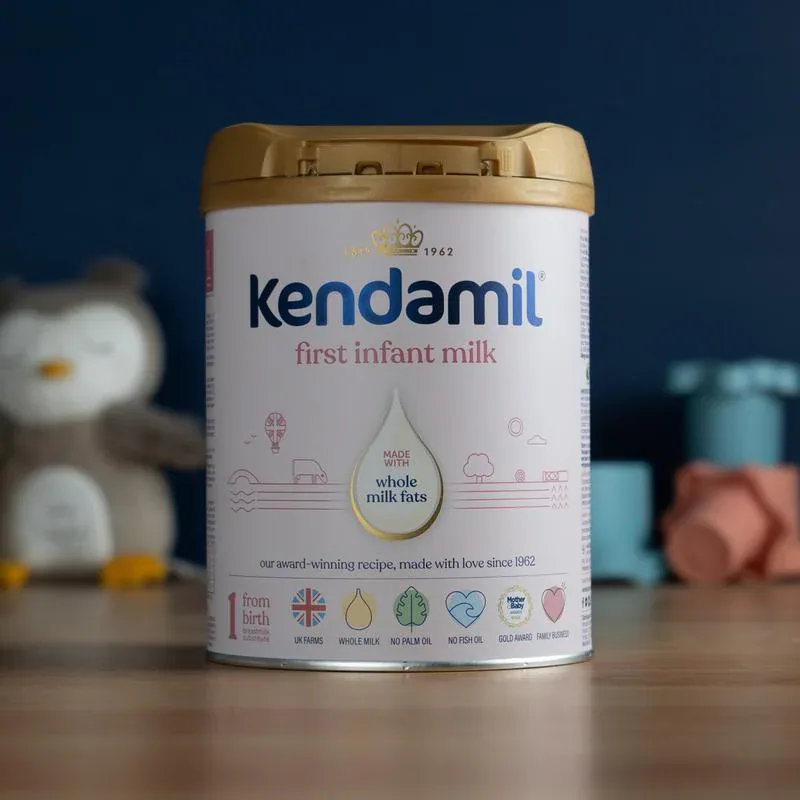
7. Best non-organic UK whole-milk fat: Kendamil Classic Stage 1
Kendamil Classic carries the Kendamil whole-milk-fat MFGM-preservation philosophy at the brand's lower price tier (non-organic), UK Red Tractor and Vegetarian Society marks, no organic certification. GOS+FOS 9:1 prebiotic. No palm, no soy. FDA-registered for US retail. ~$1.30/oz.
For families weighting whole-milk-fat MFGM contribution at lower price than the Organic upgrade, Kendamil Classic is the in-family option. The composition difference vs Kendamil Organic is mainly the EU Organic certification plus 2'-FL HMO inclusion. Many families start with Kendamil Classic and pivot to Organic if the price gap is acceptable.
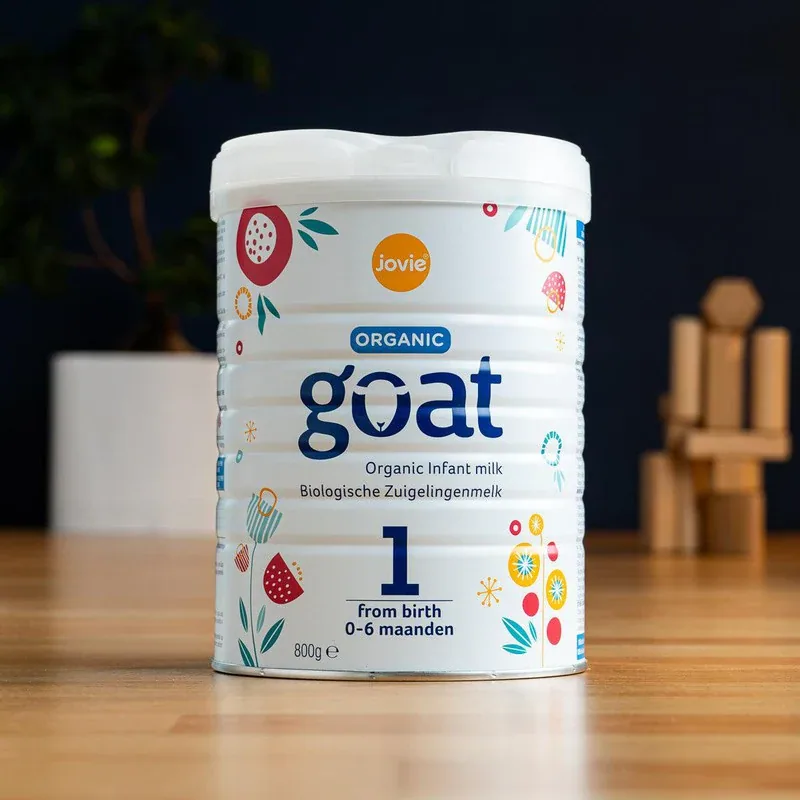
8. Best EU Organic goat-milk: Jovie Goat Stage 1
Jovie is the Dutch EU Organic goat-milk Stage 1 with whole goat milk as the primary ingredient, lactose-only carbohydrate, GOS prebiotic, no HMO. No palm, no soy. Fish-oil DHA. ~$2.30/oz delivered.
For families weighting EU Organic certification in goat-milk format plus GOS prebiotic, Jovie is the answer. For Demeter biodynamic goat- milk strictness, Holle Goat (no GOS). For HMO in goat-milk, Kabrita (non-organic). Jovie is the middle-tier organic goat option with prebiotic.
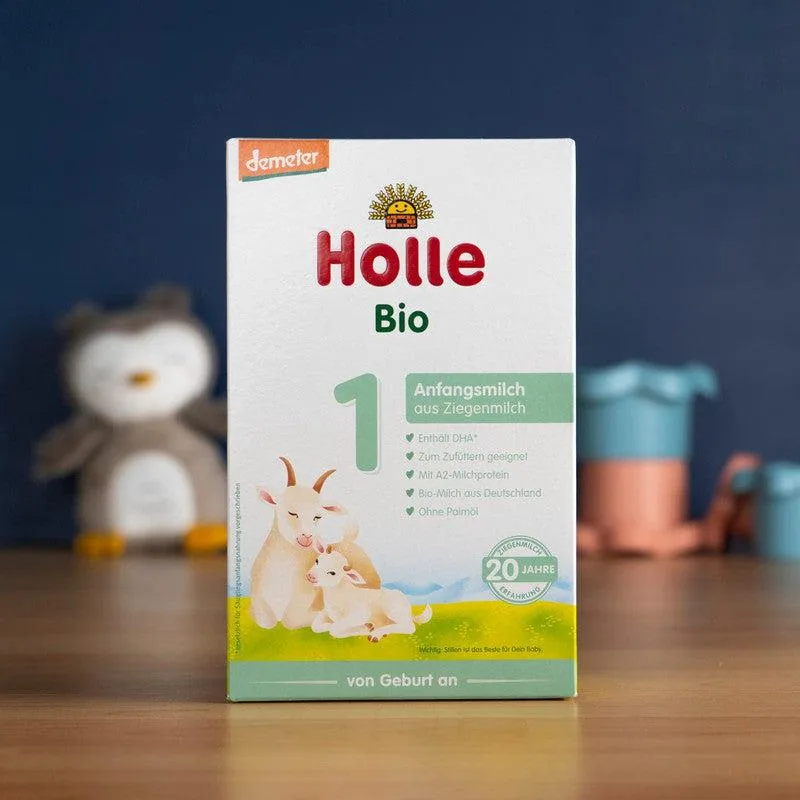
9. Best Demeter biodynamic goat-milk: Holle Goat Stage 1
Holle Goat Stage 1 is the Demeter biodynamic and EU Organic goat-milk formula. Minimalist composition: no GOS, no HMO, no probiotic. The fat blend is goat-milk fat plus rapeseed and sunflower, no palm in any form, no soy. Notably, Holle Goat is palm-free where Holle Cow is palm-inclusive. Fish-oil DHA. ~$2.41/oz delivered, 400 g tin.
For families weighting strictest organic plus goat-milk plus palm-free fat blend, Holle Goat is the unique combination globally. The 400 g tin format is smaller than the standard 800 g; plan reorder cycles accordingly.
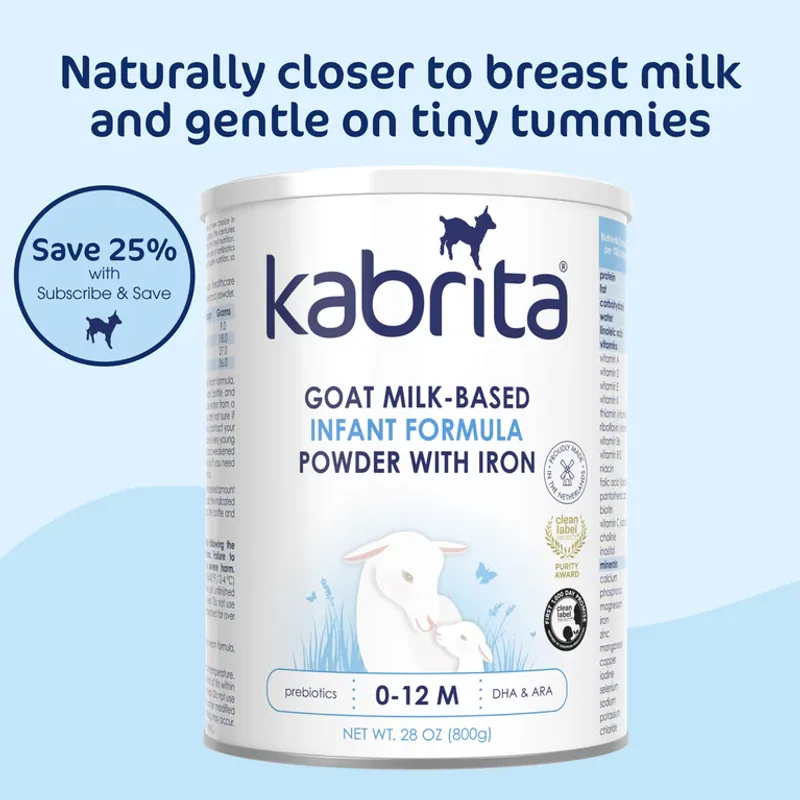
10. Best goat-milk with 2'-FL HMO: Kabrita Stage 1
Kabrita Stage 1 is the only goat-milk Stage 1 with 2'-FL HMO plus GOS at US-accessible distribution. Dutch non-organic, sn-2 palmitate structured palm fat plus rapeseed and sunflower, no soy. 60:40 whey:casein matching breast-milk reference ratio. Algal-oil DHA. ~$2.71/oz at US retail (Target, Amazon, Kabrita US direct under FDA enforcement discretion).
For families weighting HMO bioactive plus goat-milk protein, Kabrita is the only option. For organic goat-milk with HMO, no current option exists in the US-accessible market.
Comparison-table summary
| Pick | Origin | Organic | Palm | Soy | Bioactive | Price/oz | Pathway |
|---|---|---|---|---|---|---|---|
| HiPP Dutch | NL | EU Organic | RSPO yes | no | GOS + L. fermentum + Metafolin | ~$1.77 | EU import |
| Kendamil Organic | UK | EU + UK Soil | no | no | GOS + 2'-FL HMO + MFGM | ~$1.95 | FDA-registered US retail |
| Holle Cow | DE | Demeter + EU | RSPO yes | no | Minimalist | ~$1.95 | EU import |
| Loulouka | CH | EU + Swiss Bio | no | no | GOS | ~$1.45 | EU import |
| Lebenswert | DE | Bioland + EU | RSPO yes | no | Minimalist | ~$1.51 | EU import |
| Aptamil UK | UK | none | no | yes | GOS+FOS 9:1 + 29% fermented | ~$1.42 | EU import |
| Kendamil Classic | UK | none | no | no | GOS+FOS 9:1 + MFGM | ~$1.30 | FDA-registered US retail |
| Jovie Goat | NL | EU Organic | no | no | GOS | ~$2.30 | EU import |
| Holle Goat | DE | Demeter + EU | no | no | Minimalist | ~$2.41 | EU import |
| Kabrita | NL | none | sn-2 | no | GOS + 2'-FL HMO | ~$2.71 | FDA enforcement discretion US retail |
What's NOT on this list
A few European brands occasionally appear in US family research but aren't included here for specific reasons:
-
Bebivita, HiPP Group's non-organic German budget subsidiary. Quality is fine (same HiPP Group standards) but Bebivita is not imported via Organic's Best Shop or other major US resellers; US families would need to self-import from German retailers, which carries customs and authentication risks. See Bebivita Stage 1 vs HiPP Dutch Stage 1.
-
Aptamil German Profutura, German Aptamil variant. Contains palm (unlike Aptamil UK). Available via OB but less popular than the UK variant in the US-import segment.
-
Babynat, Babybio, Modilac, Gallia, French and other smaller- scale European brands. Available via OB or specialist resellers but not consistently stocked or as commonly chosen as the ten ranked above. Consider if you want more variety, but supply continuity is the practical caveat.
-
HiPP UK, produced for UK market with somewhat different composition. Less-frequently imported than HiPP Dutch and HiPP German. Stock at OB is intermittent; not a primary choice.
Frequently asked questions
Are European baby formulas legal to buy in the United States?
Is European formula better than US formula?
Which European formula is the most popular in the US?
How long does shipping take for European formula?
Can I switch between European formulas?
Are these formulas safe for babies with cow milk protein allergy?
What is the cheapest European formula?
Is HiPP Dutch the same as HiPP UK?
Related reading
-
Buying European formula in the USA, the full import logistics guide
-
How to Authenticate Imported European Baby Formula, Counterfeit Detection Guide
-
Best Non-GMO Baby Formulas for US Families (2026 Buying Guide)
-
EU Regulation 2016/127 Annex II, The Mandatory Nutrient Reference Table
-
Monthly Cost of Formula Feeding, A Realistic Budget Breakdown
-
Decoding Infant Formula Marketing Claims, What 'Premium', 'Advanced', and 'Natural' Actually Mean
Primary sources
- EU Regulation 2016/127: Infant formula compositional requirements. eur-lex.europa.eu
- FDA enforcement discretion: Personally-imported infant formula framework. fda.gov
- FDA 21 CFR Part 107: US infant formula regulation. ecfr.gov
- Demeter International: The biodynamic certification body. demeter.net
This site provides research and comparisons, not medical advice. Consult your pediatrician before changing your baby's formula.
The ranked picks
Typical US retail price, normalised to USD per ounce of powder. Imported European formulas carry shipping and importer margin; US retail brands are typically cheapest per ounce. Subscribe-and-save and private-label pricing can shift the ranking.
Data table
| Formula | Price per ounce |
|---|---|
| Kendamil Classic Stage 1 | $1.30 |
| Aptamil UK Stage 1 | $1.42 |
| Loulouka Stage 1 | $1.45 |
| Lebenswert Stage 1 | $1.59 |
| HiPP Dutch Stage 1 | $1.77 |
| Kendamil Organic Stage 1 | $1.95 |
| Holle Cow Stage 1 | $1.95 |
| Jovie Goat Stage 1 | $2.30 |
| Holle Goat Stage 1 | $2.41 |
| Kabrita Stage 1 | $2.71 |
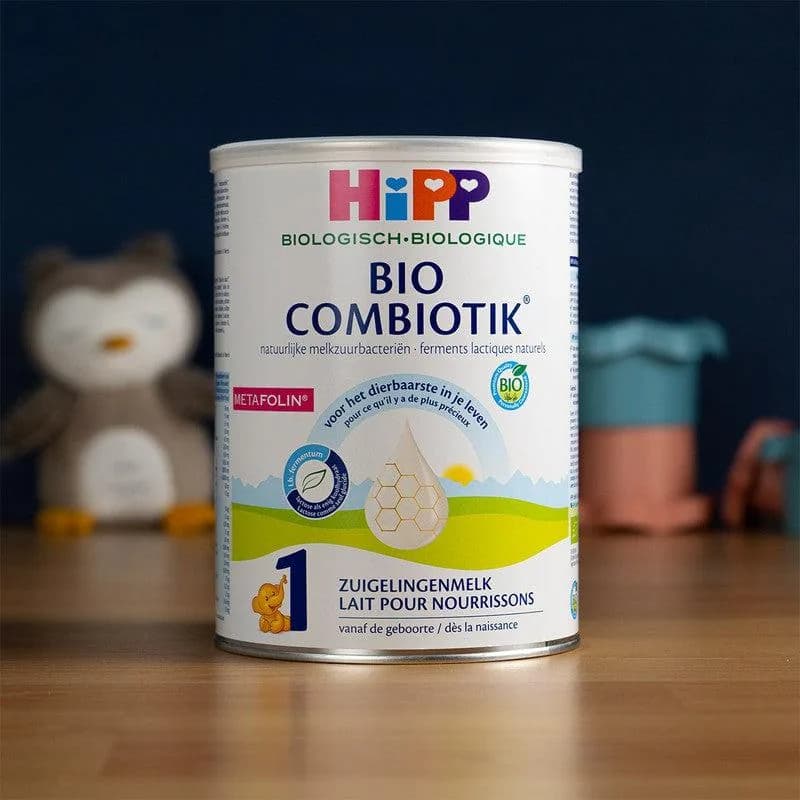
#1 · Best overall European import
HiPP Dutch Stage 1
EU Organic plus the Combiotik live probiotic (L. fermentum hereditum) plus Metafolin bioactive folate. Decades of European clinical heritage. Decade-plus US-import track record at Organic's Best Shop. The default answer for families starting with European formula.
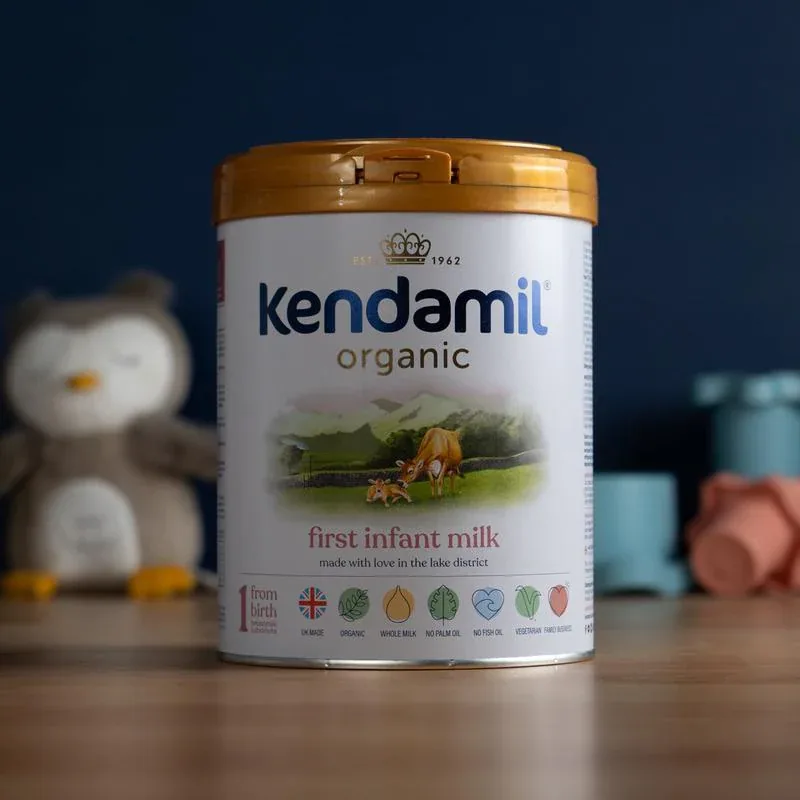
#2 · Best for whole-milk fat plus HMO
Kendamil Organic Stage 1
EU Organic and UK Soil Association Organic. Whole-cow-milk fat preserves native MFGM. Adds 2'-FL HMO plus GOS. No palm, no soy. FDA-registered for US retail at Target, Amazon, no import logistics. The unique combination of organic plus HMO plus MFGM in a Stage 1 cow-milk formula.
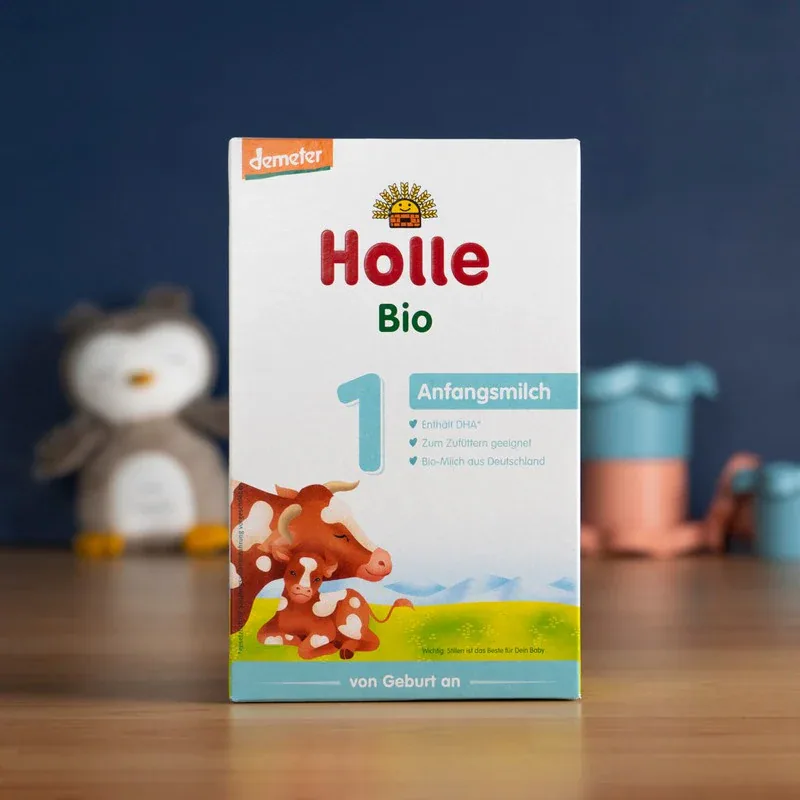
#3 · Best Demeter biodynamic (strictest organic)
Holle Cow Stage 1
Demeter biodynamic certification plus EU Organic, the strictest organic standard globally. Whole-farm biodynamic sourcing, German manufacturing. Minimalist composition (no GOS, no HMO, no probiotic) for families weighting cleanest possible inputs. Palm-inclusive (RSPO) but no soy.
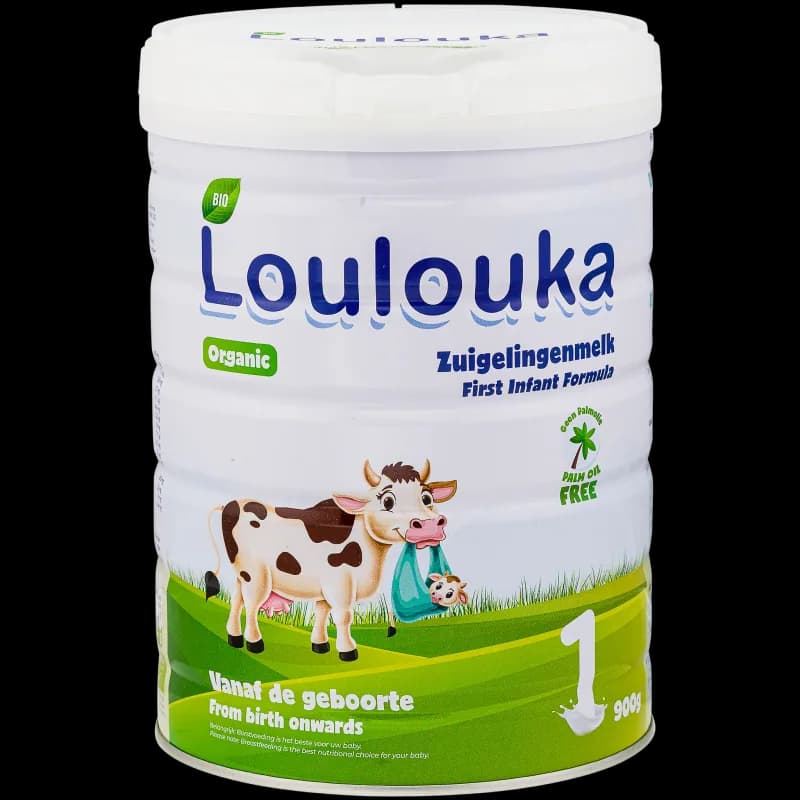
#4 · Best palm-free plus soy-free EU Organic
Loulouka Stage 1Discontinued
Swiss EU Organic plus Swiss Bio. Cleanest fat blend among EU-organic Stage 1: no palm in any form, no soy. Lactose-only carbohydrate plus GOS prebiotic. The EU-organic answer to families avoiding both palm and soy without reaching for Bobbie's USDA Organic price point.
#5 · Best minimalist Bioland organic
Lebenswert Stage 1
Bioland certification (stricter German organic association, broader than EU Organic baseline) plus EU Organic. Minimalist composition: no GOS, no HMO, no probiotic, just EU 2016/127 mandatory nutrients plus algal-oil DHA. Holle's lower-price family member. No soy, palm RSPO.
#6 · Best budget EU import
Aptamil UK Stage 1
Cheapest EU-import Stage 1 per ounce (~$1.42). Non-organic Danone Aptamil. Palm-free fat blend (UK variant specifically). GOS+FOS 9:1 prebiotic plus 29% fermented dairy (Pronutra heritage). Soy in fat blend. The price floor for EU-import Stage 1 cow-milk formulas.
#7 · Best non-organic UK whole-milk fat
Kendamil Classic Stage 1
Whole-cow-milk fat preserving native MFGM, no palm, no soy. GOS+FOS 9:1 prebiotic. FDA-registered at US retail. Non-organic but with the same Kendamil whole-milk-fat philosophy as the Organic line at lower price. Strong choice for families weighting MFGM preservation without organic premium.
#8 · Best EU Organic goat-milk
Jovie Goat Stage 1
Dutch EU Organic goat-milk with whole goat milk as the primary ingredient, lactose-only, GOS prebiotic. No palm, no soy. The EU-organic goat-milk option with prebiotic addition. For Demeter biodynamic goat-milk, look at Holle Goat instead (no GOS but stricter organic).
#9 · Best Demeter biodynamic goat-milk
Holle Goat Stage 1
Demeter biodynamic plus EU Organic in goat-milk format. Minimalist composition (no GOS, no HMO). No palm, no soy. The strictest-organic goat-milk Stage 1 globally. For families weighting both goat-milk biology and the strictest organic certification available.
#10 · Best goat-milk with 2'-FL HMO
Kabrita Stage 1
Dutch non-organic goat-milk with 2'-FL HMO plus GOS. sn-2 palmitate structured fat, no soy. 60:40 whey:casein matching breast milk. The only goat-milk Stage 1 with HMO at US-accessible distribution. FDA enforcement discretion at US retail (Target, Amazon).