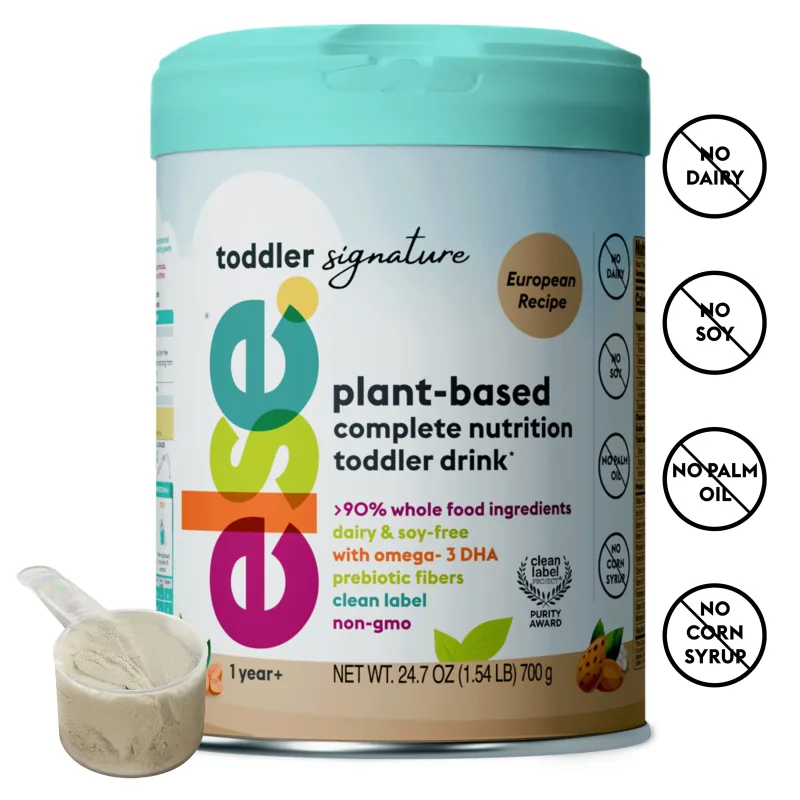

Else Nutrition is one of the more unusual entries to the broader baby nutrition category, a plant-based product line whose flagship toddler drink builds its nutritional profile from whole almonds, buckwheat, and tapioca rather than cow milk, soy, or goat milk. This structural difference matters. It also introduces regulatory complexity that parents should understand before considering the brand: Else's US-sold toddler drink is not an FDA-registered infant formula under 21 CFR 107, and the brand's infant formula (0-12 months) plant-based product is at a different regulatory stage in different markets.
Else Nutrition is a plant-based baby nutrition brand founded in Israel, present in the US and Canada through a Plant-Based Toddler Nutrition Drink for 12-36 months and a Super Cereal. The toddler drink is not FDA-regulated as infant formula, which is the distinction that matters: it is a toddler nutrition product, not a formula for infants under 12 months.
Company snapshot
| Attribute | Value |
|---|---|
| Parent company | Else Nutrition Holdings Inc. |
| Founded | 2017 |
| Corporate HQ | Tel Aviv, Israel |
| North American operations | Vancouver, British Columbia, Canada |
| Manufacturing | Canada and US contract facilities |
| Organic | Yes (USDA Organic on primary products) |
| Infant formula FDA-registered? | No, toddler drink only; infant formula (0-12 mo) not FDA-registered for US sale |
| Sold by Organic's Best Shop | No |
| Public-company status | Publicly traded (TSX-V: BABY) |
The critical regulatory distinction
This is the part most worth understanding up front.
Infant formula vs toddler drink: US regulatory meaning
Under FDA regulation:
- Infant formula (0-12 months) is governed by 21 CFR 107. Requires pre-market notification, specific nutrient content, annual facility inspection, and adherence to established standards.
- Toddler formula / toddler drink (12+ months) is NOT governed by 21 CFR 107. It falls under general food regulations. No specific nutrient requirements apply beyond standard food safety rules.
Else's US-sold toddler drink is in the second category. It is legally and appropriately marketed for ages 12 months and up. It is not appropriate as a primary nutritional source for infants under 12 months unless pediatrician-approved for specific medical reasons.
Why this matters for parents
Some parents, particularly those pursuing vegan or dairy-free feeding for ethical, religious, or medical reasons, may be tempted to use a toddler drink earlier than 12 months. This is generally not advised without specific pediatric guidance. The 0-12 month period has specific nutrient requirements that toddler drinks are not designed to meet.
For detailed discussion of stage transitions, see when to switch formula stages.
What about Else's infant formula (0-12 months)?
Else has developed a plant-based infant formula. Regulatory status:
- US: not currently FDA-registered under 21 CFR 107 (as of latest verified information)
- Canada: limited availability under Health Canada regulations
- International: varying status by country
Parents in the US who specifically want a plant-based infant formula for 0-12 months have very limited FDA-registered options. Soy-based formulas (Enfamil ProSobee, Similac Soy Isomil, Earth's Best Soy) remain the most widely available and regulatory-clear plant-adjacent category.
What makes Else distinctive
1. Almond, buckwheat, and tapioca base
Instead of cow milk protein or soy protein, Else uses:
- Almonds as the primary protein source
- Buckwheat for additional protein and micronutrients
- Tapioca as a carbohydrate source
This approach produces a plant-based product without using soy protein (which is the most common plant-based infant formula protein). For families specifically avoiding soy (due to allergy, phytoestrogen concerns, or dietary preference), this is a meaningful alternative.
2. USDA Organic and Non-GMO Project Verified
Else's US-sold toddler drink holds USDA Organic certification and Non-GMO Project verification, both third-party assurances of farming practices and GMO-free status. For the underlying certification framework, see organic certifications compared.
3. Vegan and kosher certifications
Multiple values-aligned certifications make Else one of the few baby nutrition products formally verified for families with vegan or kosher dietary requirements.
4. Publicly-traded parent company
Else Nutrition Holdings is publicly traded on the TSX Venture Exchange (BABY.V). This provides a level of financial transparency and regulatory disclosure that most privately-held baby formula companies do not match. It also carries commercial risk, a publicly traded small-cap must sustain growth expectations.
Product line
Super Cereal (6-12 months)
Complementary feeding product for infants 6-12 months. Marketed as an adjunct to breastmilk or formula, not as a replacement. Grain, legume, and nut-based, organic. Standard US food labeling applies.
Toddler Nutrition Drink (12-36 months)
The flagship product. Plant-based toddler drink intended for children 12-36 months as part of a varied diet. USDA Organic, Non-GMO Project Verified, vegan.
See the SKU record: Else Plant-Based Toddler Drink.
Infant Formula (0-12 months): pending / international
As of latest verified status, not FDA-registered for US sale as infant formula. International availability and regulatory status vary.
How Else compares
Within plant-based infant/toddler nutrition
- Soy-based infant formulas (Enfamil ProSobee, Similac Soy Isomil, Earth's Best Soy): FDA-registered, soy protein based, contain added DHA/ARA. Appropriate for families with diagnosed CMPA who also need plant-based, or for religious/ethical vegan families. See our CMPA explained for the soy vs hydrolysate distinction in CMPA treatment.
- Rice-based formulas (limited US availability), used in some regions for specific allergies.
- Almond-based toddler drinks: Else is the most prominent almond-based branded product in the US toddler category.
Structural comparison
Else's almond-buckwheat-tapioca base is nutritionally distinct from both dairy and soy formulas. It provides different micronutrient profiles, different fat composition, and different carbohydrate structure. For infants or toddlers with multiple allergies (dairy, soy, and other common allergens), Else may fill a specific niche.
Regulatory status summary
For parents considering Else Nutrition:
| Product | Age | US Regulatory Status | Appropriate Use |
|---|---|---|---|
| Super Cereal | 6-12 months | General food regulation | Complementary feeding alongside breastmilk/formula |
| Toddler Drink | 12-36 months | General food regulation | Part of varied diet after 12 months; not FDA-regulated as formula |
| Infant Formula (0-12 mo) | 0-12 months | Not FDA-registered | Not currently available as FDA-regulated infant formula in US |
For the broader regulatory framework, see:
Editorial notes from María
Else Nutrition is an interesting and legitimate brand in the broader baby nutrition category, but the regulatory distinction between toddler drinks and infant formula is critical for parents to understand before considering it. The brand's primary US product is a toddler drink, appropriate for children 12 months and older as part of a varied diet, not as primary infant nutrition.
For vegan families with infants under 12 months, the options remain constrained: soy-based infant formula (FDA-registered but with its own considerations around phytoestrogens and palatability), or consulting a pediatric dietitian for specific guidance. The plant-based 0-12 month space is genuinely underdeveloped in the US regulatory context, and no current commercially available FDA- registered infant formula uses almond, buckwheat, or similar whole- food plant protein bases.
If Else or a comparable brand achieves FDA 21 CFR 107 registration for plant-based infant formula in the future, it would be a meaningful addition to the category. Until then, Else is a reference-tier profile for the Atlas, with clear regulatory boundaries documented.
Else is not sold by Organic's Best Shop. This hub exists for Atlas completeness.
For related profiles, see:
- Soy-based US formulas via Enfamil, Similac, Earth's Best (no dedicated hubs yet; see Enfamil, Similac, Earth's Best brand pages)
- Baby's Only Organic, US organic cow-milk alternative
- Kabrita, goat milk alternative for dairy-sensitive infants
Frequently asked questions
Is Else Nutrition a true infant formula?
Is Else suitable for infants with cow's milk protein allergy (CMPA)?
Why would parents choose plant-based formula?
Is Else Nutrition organic?
How does Else compare to soy formula?
Where is Else Nutrition manufactured?
Primary sources
- Else Nutrition Holdings, Inc.: Company information and product disclosures. elsenutrition.com
- FDA, "Infant Formula Guidance Documents and Regulatory Information." 21 CFR 107. fda.gov
- TSX Venture Exchange: Else Nutrition Holdings (BABY.V) public filings and disclosures.
- USDA National Organic Program: Certification standards. ams.usda.gov
Related reading
This site provides research and comparisons, not medical advice. Consult your pediatrician before changing your baby's formula.